Charlotte Brontë’s Brussels
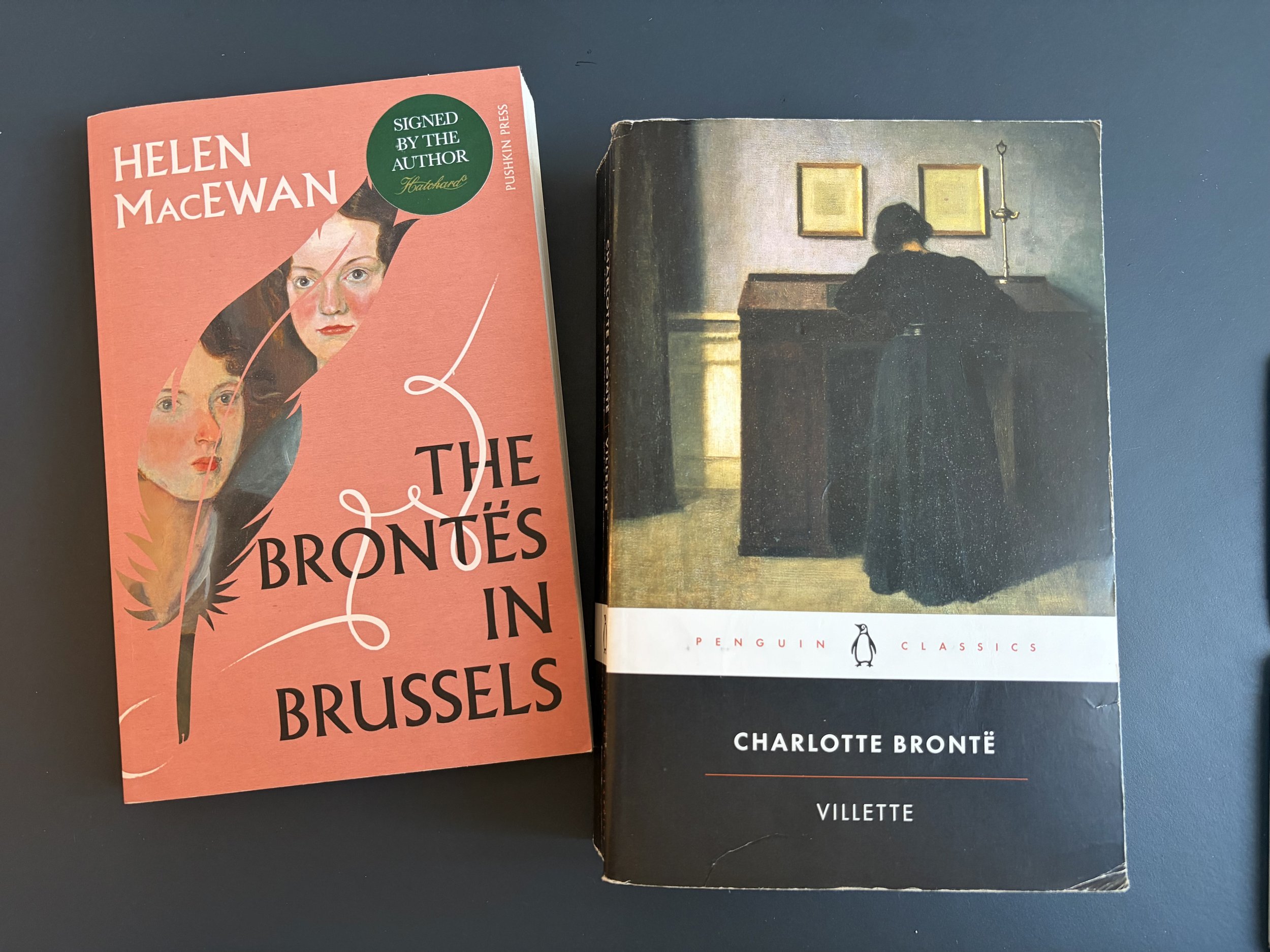
After we moved to Brussels last year, my thoughtful husband gave me a copy ofThe Brontës in Brussels by Helen MacEwan. This is an interesting account of the time Charlotte and Emily Brontë spent at a boarding school, a pensionnat, for young girls and ladies. The Brontë sisters arrived in Brussels in 1842. They came to learn French, which they believed would be useful to them when they set up their own school (something they never managed to do; instead, they wrote a few extraordinary novels and died quite young).
Emily left after one semester, but Charlotte staid a year more and apparently fell in love with a happily married professor at the school, her French professor and the schoolmistress’ husband. He became the basis for the character of Monsieur Paul Emanuel in her novel Villette. I decided to read the novel — her first, written before Jane Eyre. It is very closely based on her experiences in Brussels, and takes place largely at a school for girls in the heart of the city. She calls her fictional version of Belgium Labassecour, which is a pretty funny/insulting name since it means “farmyard” in French.
The school Emily and Charlotte attended and its large enclosed garden are gone today, as is the street it stood on, Rue Isabelle, which is underground now (you can see part of it preserved in the subterranean museum of the Palais du Coudenberg). But after reading MacEwan’s book, one can visualise exactly where some of the scenes in Villette take place, such as the early one in which the friendless and penniless Miss Lucy arrives in the city, makes her way through a dark park and down a flight of stairs, is harassed by strange men in the street, and finds her way to the pensionnat where she will find employment.
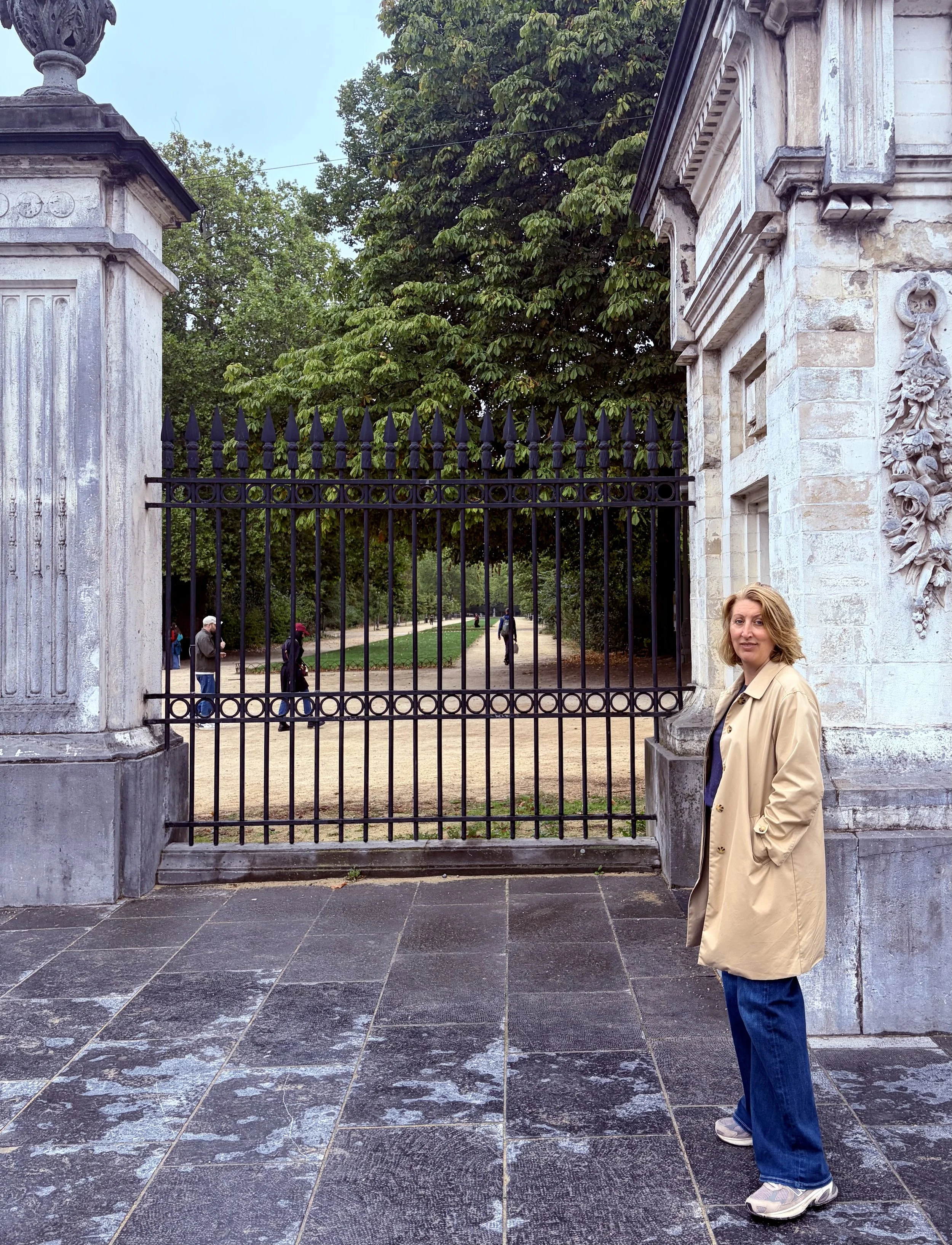
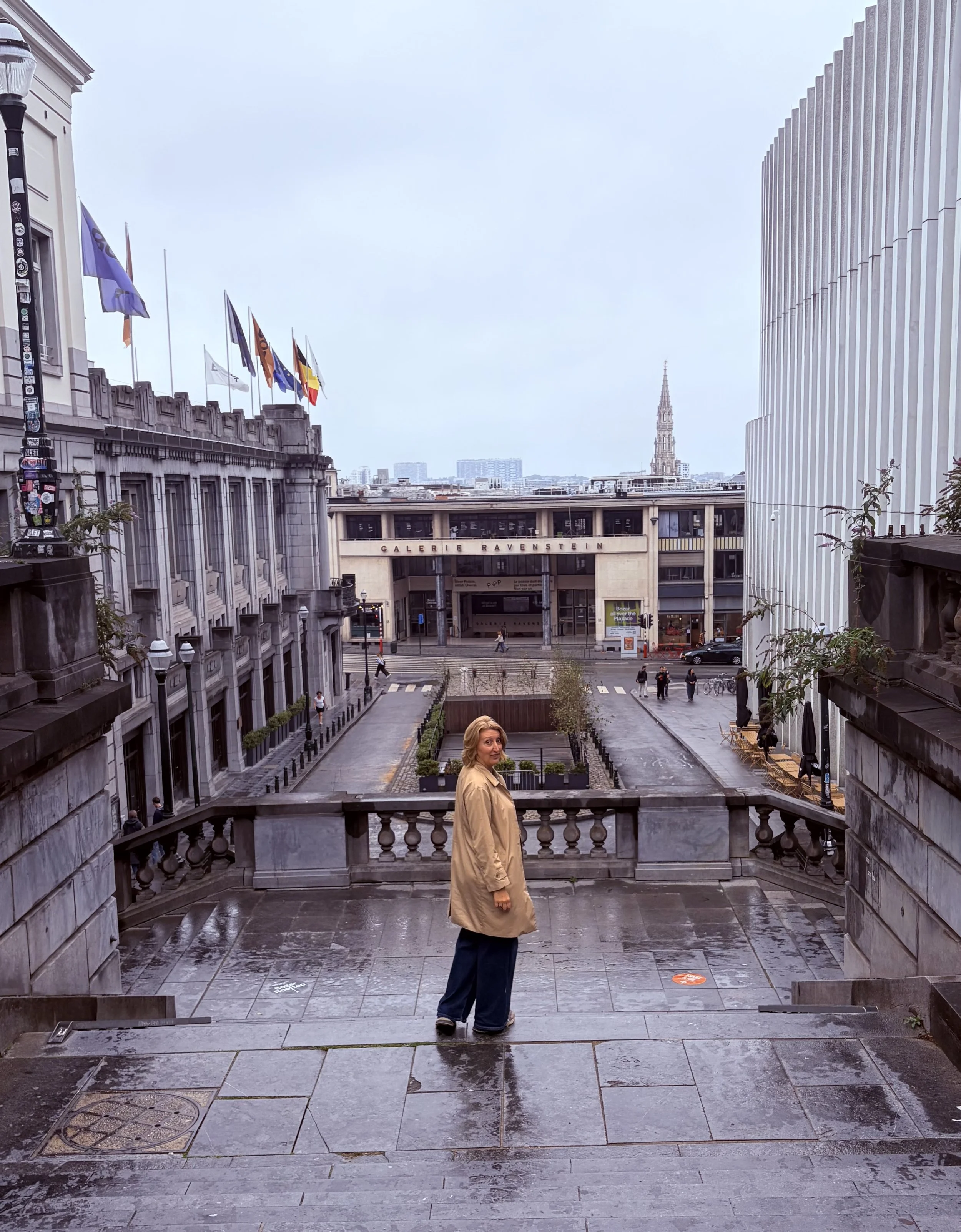
(The park is the Parc Royale and there are still steps, along the Rue Baron Horta, leading to the Galerie Ravenstein and the corner where the Bozar arts center stands today. MacEwan does walking literary tours of Brussels and her book has wonderful maps and illustrations).
In many ways Villette is a flawed debut novel; it is overly long and has little plot to speak of. Not much happens in it except often small emotional dramas; the central relationship, which should by all rights be a love story between Miss Lucy and Monsieur Paul, is all angst and anticipation and misunderstanding and very little action. This first book does not have the focus, emotional cohesion and dramatic twist and turns of a great work like Jane Eyre. But it still shows an impressive talent and ambition. Bronte wrings her limited life experience for all it is worth, bringing to bear her considerable powers of observation and imagination.
I want to quote from one passage at length because it exemplifies some of the book’s fundamental and overlapping aspects: its ironic energy (which I like better than its romantic and gothic élans, although they aren’t bad either); Lucy’s honesty, pragmatism and independence; and the author’s view of what makes good art (implied here, by a dissection of bad art). One day Lucy visits a gallery of paintings:
One day, at a quiet early hour, I found myself nearly alone in a certain gallery, wherein one particular picture of pretentious size, set up in the best light, having a cordon of protection stretched before it, and a cushioned bench duly set in front for the accommodation of worshipping connoisseurs, who, having gazed themselves off their feet, might be fain to complete the business sitting: this picture, I say, seemed to consider itself the queen of the collection. It represented a woman, considerably larger, I thought, than the life. I calculated that this lady, put into a scale of magnitude suitable for the reception of a commodity of bulk, would infallibly turn from fourteen to sixteen stone.® She was, indeed, extremely well fed: very much butcher's meat - to say nothing of bread, vegetables, and liquids - must she have consumed to attain that breadth and height, that wealth of muscle, that affluence of flesh. She lay half-reclined on a couch: why, it would be difficult to say; broad daylight blazed round her; she appeared in hearty health, strong enough to do the work of two plain cooks; she could not plead a weak spine; she ought to have been standing, or at least sitting bolt upright. She had no business to lounge away the noon on a sofa. She ought likewise to have worn decent garments; a gown covering her properly, which was not the case: out of abundance of material - seven-and-twenty yards, I should say, of drapery - she managed to make inefficient raiment. Then, for the wretched untidiness surrounding her, there could be no excuse. Pots and pans - perhaps I ought to say vases and goblets - were rolled here and there on the to say vases and goblets - were rolled here and there on the foreground; a perfect rubbish of flowers was mixed amongst them, and an absurd and disorderly mass of curtain upholstery smothered the couch and cumbered the floor. On referring to the catalogue, I found that this notable production bore name ‘Cleopatra.’
M. Paul arrives, but he is struck by something else altogether — that Lucy is there by herself, and that she should be looking at a picture that displays a largely nude female body.
“Astounding insular audacity!” cried the Professor. “Singulières femmes que ces Anglaises!”
“What is the matter, monsieur?”
“Matter! How dare you, a young person, sit cooly down, with the self-possession of a garçon, and look at that picture?”
“It is a very ugly picture, but I cannot at all see why I should not look at it.”
One thing I find fascinating about Villette is the degree to which it a story of culture clash. Bronte places a great emphasis on the cultural differences between the British and “continentals” (and the obvious superiority of the British) in terms of taste, morals, and manners, with a particular emphasis on the fact that British women are more honest and independent. The propensity of British women to travel alone (as Lucy does, leading to somewhat harrowing experiences) is remarked upon repeatedly.
Generally the Labassecouriens are described as overly emotional, with a tendency to be dishonest and with no strong inner moral compass. This is partly ascribed to religion — Catholicism is presented as a religion that teaches subservience to external authority, which is exercised through constant surveillance. The headmistress of the school where Lucy works, the remarkable Madame Beck, is a perfect example of this: charming, clever, cold, entirely self-interested, given to spying constantly on her pupils and staff.
And yet Brontë complicates this in a number of ways. There is a memorable scene in which Lucy, sick and lonely and in great mental and emotional distress, enters a confessional with a sympathetic Catholic priest, tells him she is Protestant, and unburdens herself. There is also the fact that she falls in love with M. Paul, who in addition to being Catholic has a number of other character flaws. These include a passionate, impetuous nature and a great desire to dominate others and be the center of attention; Lucy notices these faults from the very start and also finds them utterly endearing (which I find endearing in Lucy).
It is painful to read Bronte’s fictionalized, idealised version of Lucy and M. Paul’s relationship alongside the letters that Charlotte wrote to the real M. Paul — the Belgian professor Constantin Heger — after leaving Brussels (which McEwan quotes). Charlotte’s desire to maintain contact with her former teacher seems to have been only sharpened by his reluctance to engage with her. This is from one of the last letters she wrote to him, after several previous ones begging for a word from him had gone unanswered:
I know that you will lose patience with me when you read this letter - You will say that l am over-excited - that I have black thoughts etc. So be it Monsieur - I do not seek to justify myself, I submit to all kinds of reproaches - all I know - is that I cannot - that I will not resign myself to the total loss of my master's friendship - I would rather undergo the greatest bodily pains than have my heart constantly lacerated by searing regrets.
If my master withdraws his friendship from me entirely I shall be absolutely without hope - if he gives me a little friendship — a very little - I shall be content - happy, I would have a motive for living - for working.
Monsieur, the poor do not need a great deal to live on - they ask only the crumbs of bread which fall from the rich men's table - but if they are refused these crumbs - they die of hunger - No more do I need a great deal of affection from those I love - I would not know what to do with a whole and complete friendship - I am not accustomed to it - but you showed a little interest in me in days gone by when I was your pupil in Brussels - and I cling to the preservation of this little interest - I cling to it as I would cling on to life.
Perhaps you will say to me - I no longer take the slightest interest in you Miss Charlotte - you no longer belong to my household - I have forgotten you?"
Well Monsieur tell me so candidly - it will be a shock to me - that doesn't matter - it will still be less horrible than uncertainty.
I don't want to re-read this letter - I am sending it as I have written it - Nevertheless I am as it were dimly aware that there are some cold and rational people who would say on reading it - ‘she is raving' - My sole revenge is to wish these people - a single day of the torments that I have suffered for eight months - then we should see whether they wouldn't be raving too.
One suffers in silence so long as one has the strength and when that strength fails one speaks without measuring one's words too much
I wish Monsieur happiness and prosperity.
These are the overwrought missives of a person inexperienced in love, trying to will a relationship into existence; it is perhaps no surprise that the older, married man who received them seemingly decided it was best not to answer them. Poor Charlotte! Thank goodness she did in fact find plenty of motive for living and working after that.
The Contradictions of Giorgia Meloni
Last Spring I started writing a profile of Giorgia Meloni, and it came out in July (while I was on vacation and largely offline) in the Ideas Letter.
The first thing about Meloni that bears emphasizing is what an impressive political communicator and performer she is: dramatic, combative, quick-witted. Meloni also has a striking, unusual personal story that she has told often and well and has linked to her politics. Absent father, lower-class background; the transformation from an awkward, overweight, bullied and irascible kid into a star right-wing teen activist. In my notes for the piece I wrote that Meloni has “daddy issues” and “a huge chip on her shoulder.” Today she is an unmarried single mother who champions traditional family values; a woman who loves competing with (and beating) men but doesn’t believe in feminism; a right-wing politician who can only reject the Fascist roots of her party so far without denying her own past.
But perhaps the most interesting thing about Meloni is that, despite her extremely aggressive (and frankly often mendacious) rhetoric, she is cautious and not at all disruptive in the way that, say, Trump is. Meloni is interested in getting into power and staying in power and — unlike some other right-wing populists — in governing. One of my arguments is that her political project has been hard to define because it has little original or well-articulated content (beyond the usual broad right-wing anti-immigration anti-woke lines), little in terms of actual policy solutions to offer to the problem of Italy’s decline, but is open to constant redefinition to suit her shifting interests and agendas.
On a personal note, it was fascinating to write about Meloni, who is almost exactly my age and who grew up in Romes at the same time I did, her early adolescence marked by the same turning points in Italian political culture that I remember (the assassinations of anti-mafia judges Falcone and Borsalino, the anti-corruption Mani Pulite investigation that brought down the entire political system). One of the pleasures of the piece for me was working in Italian — watching many Meloni videos, reading her autobiography and some excellent books about her.
Some terms that I had not heard before: “faccettismo” which means making “little faces,” something Meloni does all the time; “sdoganare” terms and ideas, meaning to “get them through customs,” that is to normalise them; “buonismo” and “buonisti,” a term of derision and condescension towards bleeding-heart liberals; and the way members of Meloni’s party describe themselves as “melocentrici.”
Arabic literature in Marseille
Last week I went to Marseille to visit friends and to attend the Lignes de Faille (“Faultlines”) literary festival, put on by the Karkadé Agency, which gathered Arabic writers, translators, publishers and readers.
The scholar and translator Richard Jacquemond (whose translations have been a great gift) spoke of the long history of Arabic writing inspired, composed and published in Europe, starting with Rifa’a al-Tahtawy’s L’Or de Paris (al-Tahtawy was part of an Egyptian delegation sent to France to acquire scientific knowledge, which actually landed in Marseille just 200 years ago) and including Ahmad Faris El-Shadiyaq’s Leg Over Leg, which was written and published in Paris in 1855.
In attendance were the Egyptian author Mohammed Rabie, who runs a famous Arabic bookstore, Khan Aljanoub, and now also a publishing house, in Berlin. And the Lebanese (now Berlin-based) writer Souhaib Ayoub, who as a teenager lived on the streets of Tripoli, and who spoke with enthusiasm of making exile into a home, turning it into a chance to think and see differently. I picked up Ayoub’s novel Le Loup de la Famille (“The Wolf of the Family”) because everyone said good things about it and also because he was so funny/charming and it has such a great cover.
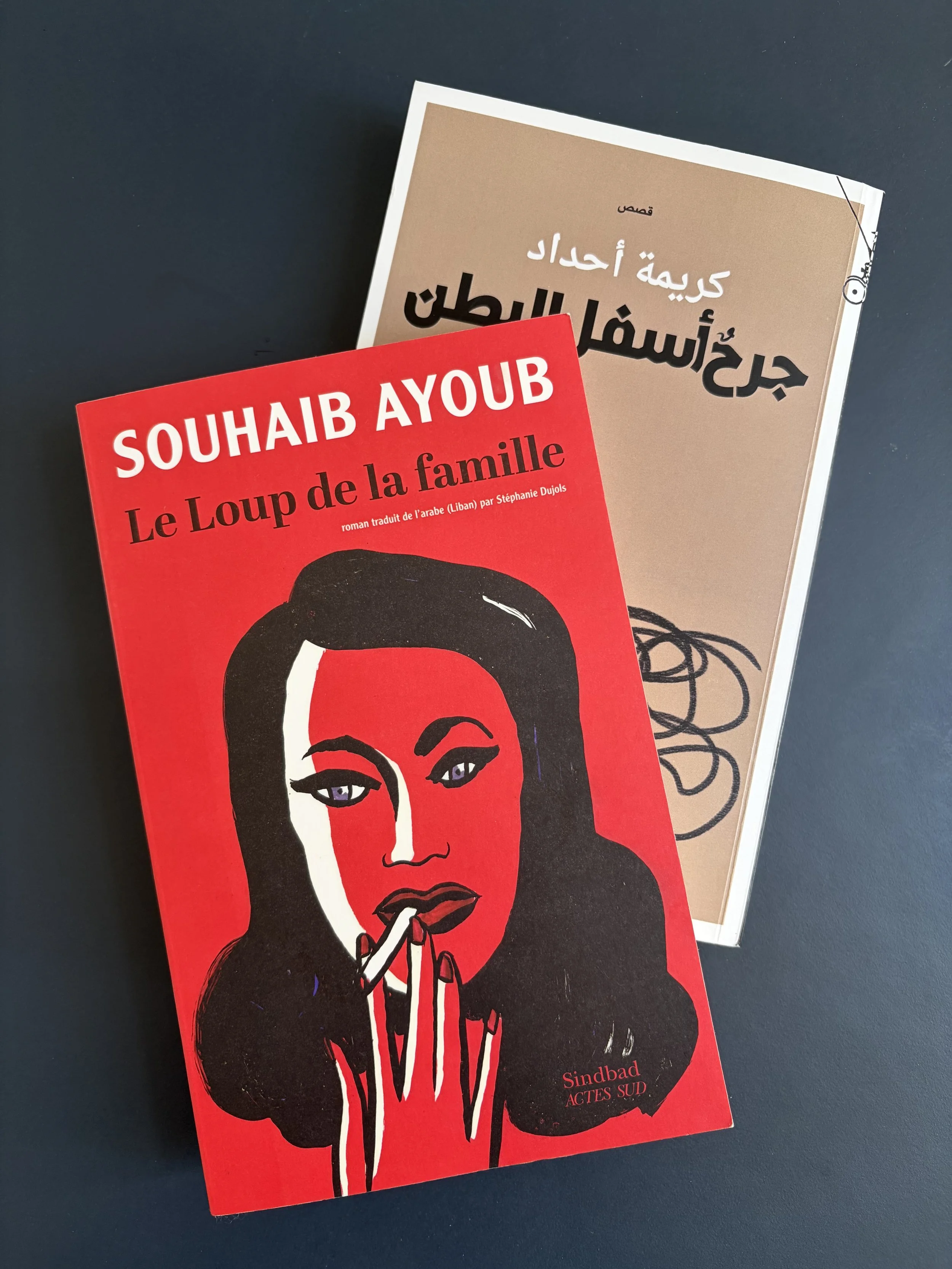
Karima Ahdad’s Lower Abdominal Wound and Souhaib Ayoub’s Wolf of the Family.
I am intrigued by the question of when and how leaving one’s country feels like a choice versus a necessity; where one draws the line between freedom, survival and escape; how and if one remains alienated and wounded, with a sense of loss that can never be quite overcome; or how (perhaps at the same time) one remakes oneself in a new place, adding another language, another community, another layer to one’s identity.
Of course why, how and when one has left matters greatly; some have exile thrust upon them by circumstances that are absolutely tragic, violent and unjust. I was moved to tears by the poet Yousef el-Qedra’s reading of several of his astounding poems. El-Qedra left Gaza for Marseille just a year ago. And yet he had beautiful things to say about the new city he lives in; both Marseille and Gaza “know the meaning of arriving and leaving,” both “speak the language of the sea.”
The next day the Francophone Lebanese artist and writer Lamia Ziadé, speaking of her new memoir/graphic novel Rue de Phénicie, compared living abroad to the special reducing lens painters use to see their works as if at a distance. Her new book, which I haven’t gotten my hands on yet, is partly the story of her joyful youthful explorations of life in Paris, when she moved there during the Lebanese Civil War. But also of her gradual politicisation over the years (or perhaps more accurately of the way she shed a certain avoidance of politics; the only way she could enjoy her art studies in Paris, she writes, was by not speaking of and trying not to to think too hard of Lebanon at all).
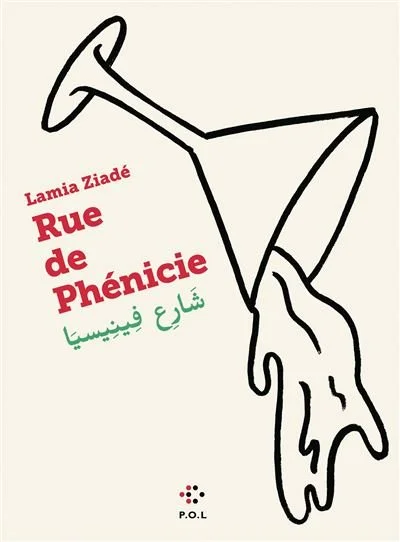
Ziadé, whose drawings I absolutely adore, packs a lot of nuance and depth into her seemingly casual, personal story-telling. She was also very forthright about the dynamics of publishing her work in France. She said the lighter autobiographical section of her new book was a way to get her mainstream, literary publisher to “swallow the pill” of the book’s politics. She noted that her work has always been very well received in French media; but reviewers and interviewers also always avoid engaging with Palestine, even when it is an important part of her stories.
The last talks I attended was by the Syrian writer and reporter Samar Yazbek, who has written extensively about the Syrian civil war and who interviewed injured people evacuated from Gaza to Qatar. (The English translation of her book, Your Presence is a Danger to Your Life: Voices from Gaza, has just been released by Fitzcarraldo). I deeply admire Yazbek for her empathy and dedication; it also made me angry to hear her talk about her latest work; each one of the interviews contains the kind of story that should bring the world screeching to a halt — but that has not. Yazbek herself remains committed to “deconstructing evil…searching for truth…looking suffering in the face.”
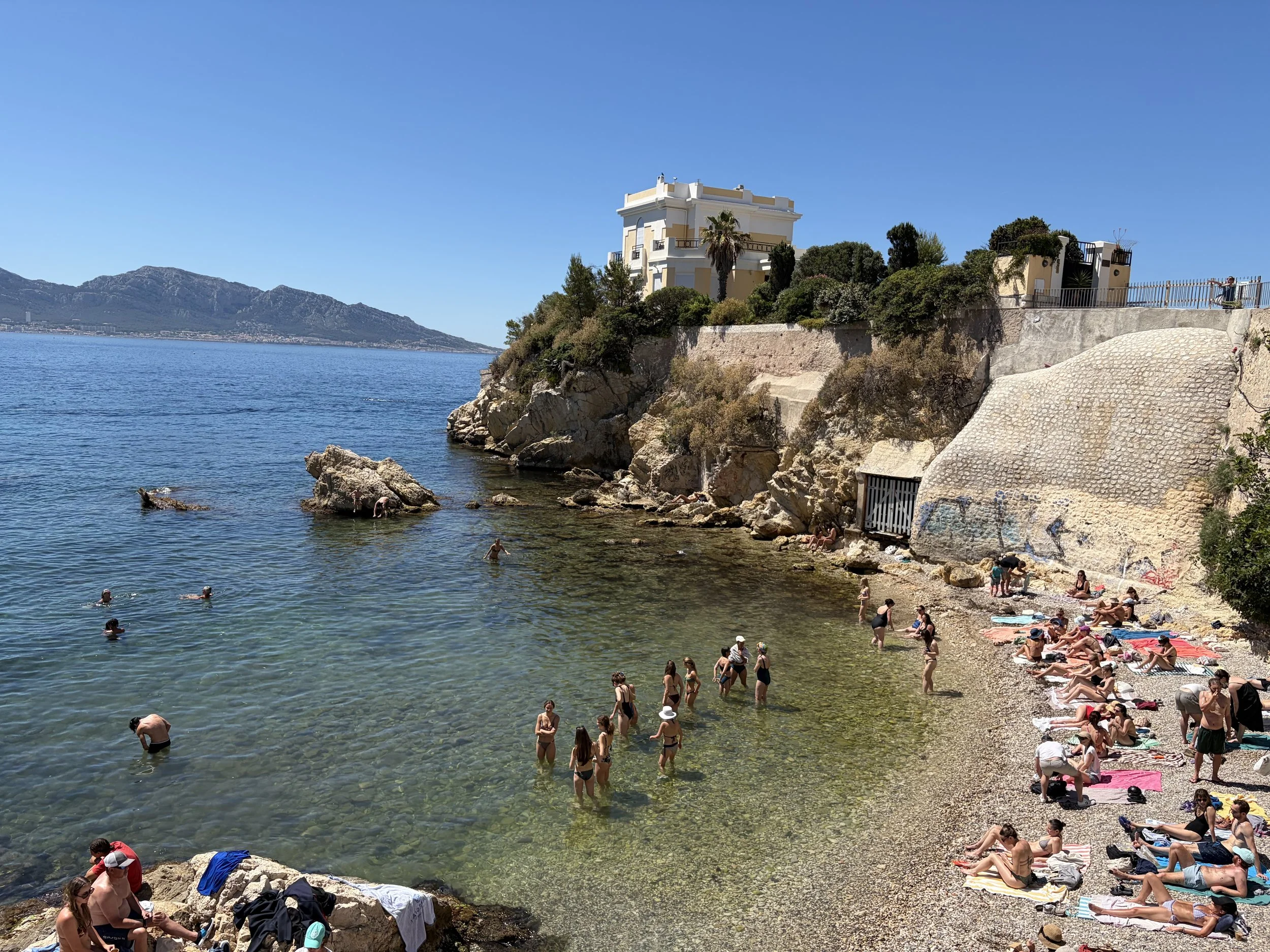
The small-ish scale of this event made for a wonderfully intimate, honest and open series of exchanges. It was lovely to spend time with Arabic writing in a way that emphasised how much that writing is part of the space of the Mediterranean. It was great to meet the Moroccan writer Karima Ahdad — who we have interviewed on BULAQ previously— in person and to pick up her new short story collection. I also discovered two very cool and new-to-me cultural spaces, La Fabulerie (right in downtown Marseille near the port) and La Friche, a vast rooftop performance space in the north of the city. And of course I did manage to get to the sea, as one must.
Winter/Spring Readings
Welcome to another instalment of a sporadic journal I’m keeping of my readings / viewings (the ones that I am not doing for work, meaning the selection is a random mix of new and old works and is unrelated to current events). I have let this one grow slowly since I posted in January, so it is quite long.

Bluebells flowering in Hallerbos forest in early April
Success by Martin Amis. I started this book because I enjoyed a conversation about it on the Quality Lit Game podcast. I think the only Amis book I’d read before this was Money, a long time ago, which I remember finding funny. But reading Success convinced me that I’d rather spend my time with other authors now. Success is the story of two foster brothers with diametrically opposed trajectories in life (as one falls, the other rises). It is told in alternating chapters by the brothers, both of whom are pretty sad and awful men and one of whom is a fantastically unreliable narrator. Amis can write, there’s no doubt about it. But I grew weary of his determination to outrage and provoke; he so badly wants to be an enfant terrible. To me he reads as very influenced by Philip Roth. But the voice that Roth conjures — the voice of a Jewish American generation that is breaking into new professional and social spaces, participating in a great cultural-sexual-intellectual upheaval (I still think the best I’ve read on this is Vivian Gornick) is just more original and funny and interesting than Amis’, which at the end of the day is the voice of the British upper class. That’s without getting into the many comments in this book about how London is being taken over by yobs and foreigners, and the thin and often distasteful treatment of female characters, such as a plot line involving incest, abuse and suicide. Of course one can argue that Amis is portraying these hopelessly selfish male ids with a full awareness of what he’s doing; he does make them often funny and pathetic; but I still found their (and the author’s) mugging and preening and blustering tiresome in the end.
***
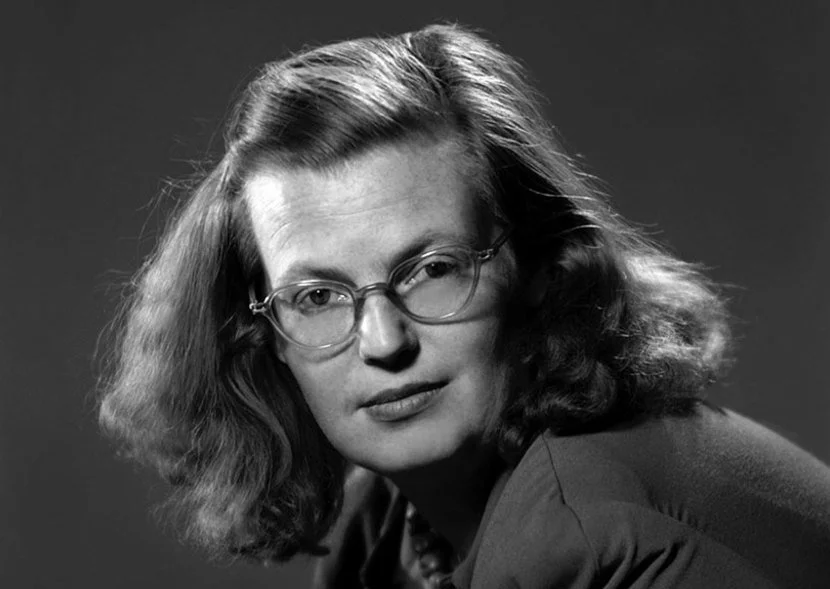
The Haunting of Hill House by Shirley Jackson. Jackson’s We Have Always Lived in This Castle is a book I adore — she is such a weird and wild writer — so I picked this up. I don’t enjoy horror and have a low threshold for physical or psychological torment, but I loved this book. It has some of the best scenes you’ll ever read in which the narrator’s perception suddenly turns, in a way that makes your stomach also turn, from affection and enthusiasm for another person to paranoia and hostility. Jackson’s pacing, the rhythm of her story-telling, is swift and exhilarating. Her tale is better than frightening — it is strange and sad, sweet and creepy. It is about a woman who is so alone she is doomed. The feeling that Jackson creates of what it is like to be in the house — with its off-kilter lines, doors that always slam shut, inexplicable cold drafts — came back to me later like an uncanny dream of my own.
***
The Sisters, by Jonas Hassen Khemiri. Recommended by my friend Adam Shatz (who pretty much never misses with book recommendations). This is an ambitious, complex, extremely readable book that I am still thinking about months later (always a good sign). The story of three Swedish-Tunisian sisters whose lives are shaped by a family curse spans decades and continents. This is world literature in the best sense; literature that moves between languages and cultures and places without making a big deal of it because what in our day and age is more natural? It has fantastic scenes set in Sweden and Tunisia and New York. It is also partly about immigration and its legacy — the question of whether the uprooting of changing countries and cultures is always a curse, and whether that curse can be lifted. It is also about whether the US, and New York — a city of immigrants — can still be haven (it seemingly is for the narrator/author who observes and tells the stories of the three sisters), which is something that I am left very much pondering given our current political moment.
***
I’ve wanted to read Helen DeWitt’s The Last Samurai for a long time. I was reminded of this when she was the center of a little internet debate recently over her turning down — or being turned down for, depends how you see it — the Windham-Campbell Prize. DeWitt was reluctant — for a variety of reasons, ranging from logistical challenges to exhaustion and mental health issues — to engage in the public events and promotional activities that were required of the winners of the $175,000 prize. After she made all this public, the Emergent Ventures fund gave her a grant in the same amount with no strings attached. (The debate that ensued was largely about whether it was reasonable for DeWitt to balk at the requirements of the prize, or whether these sorts of awards should not make such demands of writers).
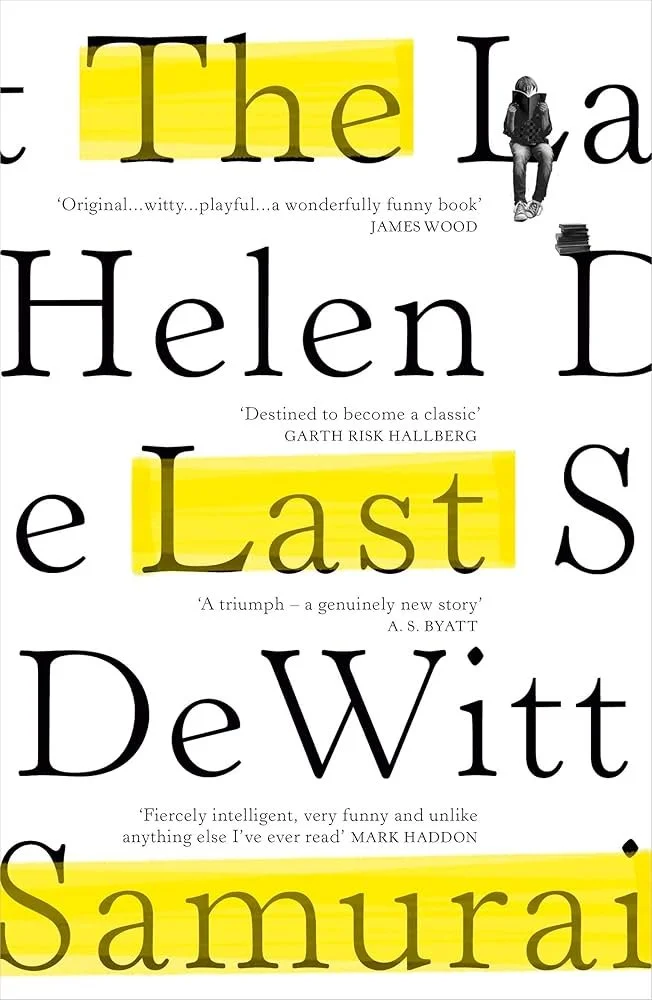
Anyway, back to The Last Samurai. It is always a joy (and a relief) when a book you’ve heard a lot about, and suspect you will like, delivers. I was in London in April, and so it seemed appropriate to get it then; the book takes place there, on the London metro and at its museums and other public institutions, where Sybilla and Ludo, the brilliant and penniless mother and son protagonists, spend a great deal of their time. The book was, as hoped, funny and original, a little sad, consistently entertaining. The way in which DeWitt manages to integrate enormous swaths of knowledge into the narration (in a way that I think has inspired many imitators) — to weave intellectual curiosity and passion and obsession into the story — is really extraordinary. Syb and Ludo lead a life almost entirely dedicated to the cultivation of learning and the pleasures of the mind — and we see the difficulties that such a life entails, the isolation and economic precarity, the confusion and ambivalence of onlookers. One cannot consider the child prodigy Ludo — who learns ancient Greek and many other languages starting at the age of three, simply because his mother rightly assumes that he can — without asking oneself some uncomfortable questions about one’s own ambitions and capacities. The books also raises questions about how extraordinary people can or should make use of their abilities. Yet all of this is done in ways that are suspenseful and playful. In the second half of the book, Ludo goes in search of his unknown father, and encounters a series of male geniuses / potential role models / disappointments. The Last Samurai was published in 2000 and I couldn’t help thinking that nowadays the ubiquitousness of smart phones and social media and AI make its vision of pure concentration, intellectual excellence, and the pursuit of knowledge for its own sake seem even more romantic and quixotic.
***
One of the great pleasures of living in Brussels now is having access to good independent cinemas. I’ve seen some great films since we moved here, but the one that most made an impression on me is 80 years old. Sciusciá is the movie Vittorio DeSica made before Ladri di Biciclette. I saw it at the Cinematek in Brussels. (It was my very clever husband’s suggestion.) The title is an Italianization of “shoe-shine” and refers to the street kids who shined the shoes of American soldiers posted in Italy right after the war. It is the story of two such boys, who are great friends and share a dream (of owning a horse) but who get charged with black market racketeering and sent to a jail for juvenile delinquents. There one mistake and misunderstanding leads to another, leading the boys to betray each other without intending to. Pauline Kael wrote that the film is “is one of those rare works of art which seem to emerge from the welter of human experience without smoothing away the raw edges, or losing what most movies lose — the sense of confusion and accident in human affairs.” Orson Wells said that when he watched this film, “the camera disappeared, the screen disappeared; it was just life . . .”
That was exactly my experience. The film is overwhelming in its immediacy, truth, emotional power. You feel that every line in the film is improvised; you feel that no one in the film is acting. You see face after face and hear line after line that are unforgettable.
This is despite the film’s technical limitation: Some night-time scenes in the film are so dark and blurry you can hardly make out what is happening; in the version I saw the subtitles were terrible but luckily I could understand the dialogue, which is in Roman dialect and absolutely wonderful.
Even as tragedy strikes there are flashes of beauty and humour and life; all these Italian kids who are so fierce and innocent. The end of the film is mercifully swift but devastating. I was bawling. What staid with me was the furious and utterly disillusioned face of the young actor playing Pasquale.
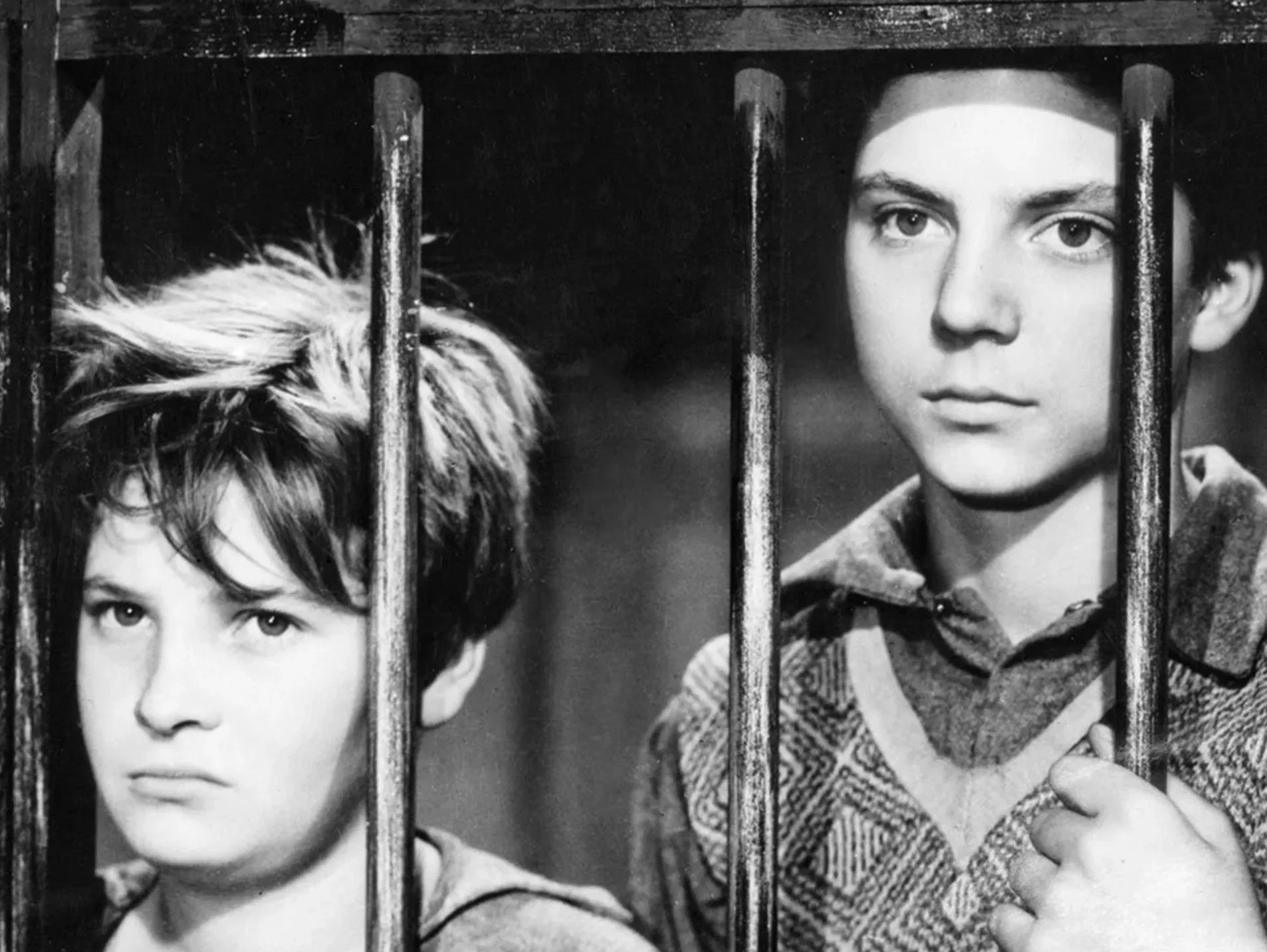
(Giuseppe, left, played by Rinaldo Smordoni; Pasquale, right, is played by Franco Interlenghi. He grew up to play the lead in another extraordinary movie, Fellini’s I Vitelloni)
Some of what I read in 2025
I know we’re already mid-January and I’m a month late to the end-of-year round-ups; but as the new year starts I am taking a look back and sharing some books that left a mark.
Best book on a topic I’m currently obsessed with: Karen Hao’s Empire of AI. A solid introduction to the topic and a detailed account of the evolution and rise of OpenAI and ChatGPT, with portraits and interviews with some of its founders. This is very skeptical but measured take that lays out arguments about the AI industry’s hidden costs, imperial agenda, and outright obfuscation of its goals. What Hao strongly suggests but doesn’t come right out and say is that the leadership of OpenAI and other similar ventures are a bunch of self-aggrandising, self-interested, disingenuous assholes. Hao shows how people like Sam Altman went very quickly from claiming to want their companies to be open and transparent and to protect us from future AI perils to embracing a hugely capitalised drive to acquire dominant market share, keep their training models secret, and avoid serious regulation. Whether they’re claiming that AI might be an existential threat or that it will solve climate change and fix healthcare — problems too intractable for us humans to figure out — the answer is always the same: their company is the one that needs to accelerate and monopolise the technology, and the undefined future benefits from this outweigh all current downsides. Some other reading on the topic that I’ve found interesting: The Parrot in the Machine, James Gluck’s review in the NYRB of two other critiques of AI; Evgeny Morozov’s essay Socialism After AI in the Ideas Newsletter; and ChatGPT is a Gimmick by Jonathan Malesic, on teaching writing at university today (which I came to by way of an episode of the Know Your Enemy podcast).
Last year I also, a bit by chance, read three of the biggest (in the sense that they got reviewed everywhere) new novels: Sally Rooney’s Intermezzo, Rachel Kushner’s Creation Lake, and Miranda July’s All Fours. My favourite of these by far was All Fours, which is funny and surprising and has some wonderful writing. It’s not worth summarising the plot, but I will just say that it starts with a forty-something female artist whose marriage is stuck taking a cross-country trip and stopping one hour from home in a small town where she becomes erotically transfixed by a younger man; she stays in town to pursue him, while spending a small fortune beautifully redecorating a motel-room-turned-hideaway. What got a lot attention are the graphic sex scenes, and they are striking. So are many of the narrator’s observations — about work, fame, friendship, sexual tension between spouses, parenting, aging, desire — observations that fill one with a sense of recognition and sweet unfamiliarity at once, that feeling of re-discovering the world through another sensibility. The book falls apart a bit in the second half, goes in a lot of directions, but then again this messiness is part of its appeal. It also spells out its this-book-is-about-a-woman’s-perimenopausal-midlife-crisis point a bit too often for me. But these are quibbles. I really enjoyed it.
I found Rooney’s book equal parts entertaining and frustrating, and often ridiculous. (Something I got no hint from reviewers, who all seem cowed into respect by Rooney’s commercial juggernaut status). I admire Rooney’s politics, particularly on Palestine, and I admire her talent. But I have liked her books less and less since Conversations with Friends, even as they have become more ambitious in terms of engaging with politics and society and big ideas and literary references.
In Intermezzo I found many of the scenes with Ivan — a former chess kid prodigy, now an awkward young adult embarking on an affair with an angelic older woman — quite touching. His slightly neurodivergent voice is genuinely sympathetic and often funny. As always in Rooney’s books, everyone is extremely attractive and likeable (although they must doubt their attractiveness and worth); supposedly brilliant (although we are told rather than shown this); and suffering from problems largely of their own making. Some examples of the ridiculousness: For some reason, Ivan’s older brother Peter’s stream-of-consciousness is rendered with fragments of inverted speech in the style of Star Wars’ Yoda (“his coat he takes off;” “Her hand he feels on his forehead; “Her mouth he kisses again” etc.) Peter becomes near-suicidal over the terrible prospect of having a polyamorous relationship with two lovely women, both of whom are open to whatever arrangement will make him happy. This conundrum, and a misunderstanding between the brothers, is all the plot offers to create mild narrative friction. Meanwhile, the sex scenes that were Rooney’s calling card back in the day are still there at regular intervals but have become … embarrassing. There is always dirty talk and degradation-lite, but all couched with a lot of caveats about how everyone respects and feels safe with each other.
Finally, Creation Lake — I hated it, as did every other person I talked to about it. I was all the more surprised as I remember really liking The Flamethrowers. I hated it so much I wondered if there was actually something interesting going on — I kept trying to articulate what I found so dissatisfying about the experience. The word that ran through my mind as I read this account of a female industrial spy infiltrating an annoying radical environmental commune in France was “curdled.”
The narrator, Sadie, is cynical in the way that stupid people are — not because she knows too much, but because she knows nothing and isn’t curious about anything. She despises the activists she infiltrates because they are middle-class, pretentious male pigs. She despises the one she is dating because he can’t tell that she is deceiving him. He deserves it, because as Sadie informs us, “he had a kind of mannered affection for old Paris, … conceived of reality as stage-directed in black and white.” (But as she helpfully informs us: “The truth is that even when Jean-Luc Godard and people like that were making those movies in black and white, which actors in fedoras who talk like gangsters, they were already an affectation.”) She despises France and the French. Compared to Americans, “The French might have better novels (Balzac, Zola, Flaubert) and they have better cheeses (Comté, Roquefort, Cobequeau). But in the grand scheme that’s basically nothing.”
And she despises anyone with any political beliefs:
“People might claim to believe in this or that, but in the four a.m. version of themselves, most possess no fixed ideas on how society should be organised. When people face themselves, alone, the passions they have been busy performing all day, and that they rely on to reassure themselves that they are who they claim to be, to reassure their milieu of the same, those things fall away.
What is it people encounter in their stark and solitary four a.m. self? What is inside of them?
Not politics. There are not politics inside of people.
The truth of a person, under all the layers and guises, the significations of group and type, the quiet truth, underneath the noise of opinion and “beliefs,” is a substance that is pure and stubborn and consistent. It is a hard, white sale.
This salt is the core. The four a.m. reality of being.
What in the love of God is she talking about? I wondered. (And she likes the salt metaphor so well she comes back to it again). As Brandon Taylor wrote in the LRB, in a wonderfully right-on review: “It’s like, stand up sister! Use your human mind!”
A character this dumb is hilarious and could be milked for comedy or pathos; but Kushner offers us no other viewpoint than Sadie’s, and nudges us to align with it by trying to make every other character even more unlikeable and superficial. There are no foils to Sadie who might be sincere or passionate or joyful. Sadie’s dismissive, self-satisfied and ignorant attitude is mirrored throughout the novel. The impression you get is that the author is too cool to even try, that this is a weird simulacrum of a novel, a cursory gesture in the general direction of writing a novel. The plot is listless and nonsensical. A baffling, glib book.
Best book I finally picked back up and finished on a vacation: literary critic Edmund Wilson’s 1940 To The Finland Station. This book opens in 1824, when a young French history professor named Jules Michelet — a man from a poor family that worships at the altar of learning — became intrigued by a mention of the Italian historian Giambattista Vico and “immediately set out to learn Italian.” It ends in 1917 with Vladimir Lenin’s arrival at the Finland Station in St. Petersburg at the onset of the October Revolution. The book’s brilliant conceit is to trace the lives of men and the voyage of ideas, the history and emergence of Communist thought.
It is obvious why this book is a classic; it’s intellectual history at its finest. The erudition is astounding, but what makes it a masterpiece is the writing. Wilson re-creates the momentum of a set of new, influential, overlapping ideas breaking out, developing, contending, then forcing their way into history. The portraits of the various figures who carried these ideas along — the empathy and brio and imagination with which they are sketched — are delightful. It doesn’t hurt that many of these men seem to have been incredible characters, with out-of-the-ordinary reserves of daring, arrogance, delusion, kindness, self-sacrifice or stubborness.
Marx and Engels’ relationship and their characters (Marx’s being generally impossible), are wonderfully described. Here is a small taste of one of Wilson’s endlessly quotable passages:
“As a Jew, Marx stood somewhat outside society; as a man of genius, above it. With none of the handicaps of the proletarian from the point of view of intellectual training or of general knowledge of the world, he was yet not a middle-class man …Certainly his character was domineering; certainly his personality was arrogant, and abnormally mistrustful and jealous; certainly he was capable of vindictiveness and of what seems to us gratuitous malignity. But if we are repelled by these traits in Marx, we must remember that a normally polite and friendly person could hardly have accomplished the task which it was the destiny of Marx to carry through—a task that required the fortitude to resist or break off all those ties which—as they involve us in the general life of society—limit our views and cause our purposes to shift.”
As for Wilson’s analyses of historical context or Communist ideas and writings, I don’t know if I agree with all of them, but I found them wonderfully engaging, as they are offered with such clarity, confidence and vivacity. Here is a writer who knew exactly what he thought, a master of his subject who captured it with eloquence and imagination, who communicated his passionate interest in it.
Best book of literary criticism (although it’s hard to say that it belongs to any genre): Geoff Dyer’s 1997 book Out of Pure Rage. This is his book about trying and failing to write a study of D.H. Lawrence; although it is also a book about Lawrence (with some very interesting things to say about him); and about Dyer’s own breakdowns and travails and travels; the difficulty of writing anything; and pushing through that difficulty (as he writes: “Anyone can have a breakdown, anyone. The trick is to have a breakdown and take it in one’s stride. Ideally one would get to the stage where one had a total nervous breakdown and didn’t even notice.”) The books’ epigraph is a citation from Lawrence about one of his own projects: “Out of sheer rage I’ve started my book on Thomas Hardy. It will be about anything but Thomas Hardy I am afraid — queer stuff — but not bad.”
Here is one of the passages I earmarked that made me laugh again on re-reading it (and that speaks 100% to my personal experience):
“Writers suffer more from the flu more than other people and I suffer more from the flu than other writers. If you’re going out to an office or a factory every day then there’s always a holiday element in being sick. You might not feel great but you are at least having a few days at home: it’s a rest, a chance to watch afternoon telly. Whereas writers are home all day anyway; they can watch all the afternoon telly they want. What the flu does is stop them working — so there is, albeit in a heavily diluted from, a sense of being on some kind of holiday. Whereas for me, even when I was feeling a hundred per cent I rarely got down to any work. I could be in the best of health, and all I did was mope around, shuffle around in my slippers, wait for the early-evening news. In terms of what I got up to on a daily basis there was next to no different between my healthy routine and my flu routine. Basically, I realised when I was laid up with the flu, I lived each day as though I was laid up with the flu even when I didn’t have the flu. Having the flu made no difference — except that I felt terrible.”
The two writers I took really deep dives into — writing reviews of their work and spending a lot of time thinking about them, their surroundings, their life stories — were the Moroccan writer Mohamed Choukri and the Norwegian novelist Vigdis Hjorth.
And finally, two books that staid with me were Hoda Barakat’s slim novel “Night Post” (translated into English as “Voices of the Lost”) and Batool Abu Akleen’s poetry collection 48 grams. That may be partly because I also got a chance to meet both authors and interview them for episodes of the BULAQ podcast — Barakat in her apartment in Paris, and Abu Akleen over a bad internet connection from Gaza. It was an honour and pleasure to talk to a great writer like Barakat about her life, her writing process, the changes she’s seen in the literary landscape — and how much she hates doing TV. It was also an honour to talk to Abu Akleen. And it was a particularly crazy and heart-sickening thing to interview someone who could have been killed any day in the previous few years, and who ran the risk of being killed any day afterwards (who might even be heightening her risk by going to an internet cafe to talk to us). She has since managed to leave Gaza. But there are so many Palestinians like her — with their own youth, talent, grace, courage, generosity, ambitions — whose lives have been snuffed out, or whose lives continue to be unconsciounably constrained and threatened.
Goodbye Sonallah
The Egyptian writer Sonallah Ibrahim died on August 13. He was someone I knew a little, and whose work and life I admired greatly.
I think the first book I read of his was Zaat, given to me by a good friend. An incredible funny phantasmagoric portrait of social conformity and aspiration in 1960s, 70s, and 80s Egypt, from the point of view of a bumbling housewife and government employee who hallucinates Egyptian presidents Nasser and Sadat redecorating her kitchen. With sections composed entirely of reproductions of the many ads and news items Ibrahim archived obsessively from newspapers. This book is out of print now, unfortunately.
I remember seeing Ibrahim at the first political protests I attended as a journalist, those of the Kifaya (“Enough”) movement, which in Cairo in 2003 was brave enough to speak out against the unending rule of President Mubarak and his family. It was that year that Ibrahim refused a major cultural award, walking up to the dais to denounced a regime that “doesn’t have the legitimacy to bestow it.”
I also interviewed Ibrahim a couple times. I wrote a long profile and article about him for the cultural section of The National, which back then was edited by Jonathan Shainin. The link is long gone, but I’ll attach the whole piece (the draft I have) at the bottom of this post. I learned a lot about him by reading his prison memoirs. He was imprisoned alongside other Communists under Nasser and Sadat, and he began writing behind bars. His first book, written in prison, was self-published there: “The hand-written volume had a cardboard cover of flattened food boxes, chapter titles in red ink made from mercurochrome, and a spine held together by bread paste.” He wrote on bits of cement sacks and cigarette papers. (The prison memoirs — and Ibrahim’s bitter early novel That Smell — have since been translated by Robyn Creswell.)
He recounts his unusual childhood in Stealth — he was the late child of a doting father and a young, second wife who was socially inferior and looked down upon by the whole family. The little boy and his dad were sort of social outcasts. Growing up in this environment of love but also secrets, sadness and unfairness seems to be what made him so determined to uncover and tell the truth, and so unable to stand injustices.
I did the Proust Questionnaire with Ibrahim once, to while away time during a photo shoot. We published that on The Arabist blog.
We did an episode of the BULAQ podcast on his novel Warda, with the scholar and translator Hosam Abul-Ela. We are re-posting it this week. In Warda Ibrahim imagined an Egyptian female freedom fighter who joins the Dofar rebellion in Oman in the 1960s and 70s. As Hosam says, the character of Warda “somehow manages to embody both the historical and the unimaginable.” She is a quite idealized character, through which the writer tries to explore a liberated female sexuality.
The last time I saw Ibrahim was when I went to interview him after the Rabaa massacre and the 2013 coup in Egypt. At the time, he was very supportive of the overthrow of the Brotherhood and of the military and said things that shocked me. I understood that he was a nationalist, secularist, anti-imperialist but I could not understand how he could dismiss the killing of his fellow citizens or believe that anything other than renewed authoritarianism was on its way. I re-read the interview again the other days, and it is still a painful read (I almost feel myself becoming my own stammering younger self). But what I also notice now is how long and sincerely he was willing to talk to me even though we disagreed so deeply — I have come to know how seldom people (particularly intellectuals and public figures of any stature and authority) are willing to do that. Despite an ideological inflexibility (the price of principle, perhaps), he had a rare human openness. In the time I spent with him, he struck me as humble, gentle, ironic, honest, and melancholy.
I often thought about going back to talk to him. I never could bring myself to. I think I worried that it would seem I was coming back to see if he would admit he had been wrong about the coup; or that his views wouldn’t have changed much, and I would be disappointed again. I regret not doing so.
***
Here is the article published, probably in 2010.
“I spent forty years trying to write it,” Sonallah Ibrahim tells me. We’re talking about his novel Stealth. This intimate, unusual family portrait by the renowned Egyptian writer is his first work to be translated into English since his 1992 masterpiece Zaat. It’s also—in its understated way--one of his best.
Just minutes earlier, I had arrived to the top (sixth) floor of Ibrahim’s elevator-free building, in a northern suburb of Cairo. I guess correctly that his door is the one with the faded Kifaya (“Enough”) sticker--Ibrahim was a regular at the opposition movement’s demonstrations against President Hosni Mubarak.
The author opens the door. Largely unknown in the West, Ibrahim is one of Egypt’s most respected men of letters. The great writer and satirist—scourge of corruption and hypocrisy, symbol of unfaltering commitment to both political principles and art—is a small, smiling, gentle-looking man. The large glasses he wears give his thin face an owlish look. Above it rises an unruly, vertical tuft of gray hair.
He waves me into his small, book-crammed apartment while apologizing for the climb I’ve just had. After he’s offered me a cup of tea and turned on a fan, he settles in on the cushions on the floor across from me. And tells me how he first thought of writing the story in Stealth over forty years ago, when he was a young political prisoner who had only just started dreaming of becoming a novelist. He’s turned the subject over in his head ever since.
“What really decided the matter is that I reached the age of my father, at that time,” says Ibrahim, who is 73. “So I was able to understand him—what kind of motives, what kind of feelings [he had].”
That time is Egypt shortly before the 1952 Revolution. The young narrator of Ibrahim’s affecting, autobiographical novel is -- like the author -- the son of an elderly man who, to his grown children’s horror, has married a much younger woman of humble origins. The novel details the daily routine of the old man and the young boy—their household arrangements, their outings, their small arguments, their dependency on each other.
The boy’s mother is missing, and throughout most of the novel we have little idea why. The child and the father’s longing for her shadows the narrative. Meanwhile the boy’s world is mysterious, precarious, unsettled by the absence of his mother and the puzzling needs of his father. The story is told from his blinkered point of view, as he tries to keep up with and make sense of events. To do so, he peeps at keyholes, eavesdrops on conversations, goes through drawers.
The book is written in Ibrahim’s typical short-hand--photographically detailed, emotionally subdued. “My father stops for a second at the door to the house before we step into the alley. He raises his hand to his mouth, twisting the curved ends of his grey mustache upwards. He makes sure that his fez tilts slightly to the left. He removes the black, burnt-out cigarette from his mouth.”
Translator Hosam Aboul-Ela does a fine job but falls short of the limpidity and concision of the original (especially compared with the superb French translation by Richard Jacquemond).
We nonetheless fall into the flow of this childhood world precisely recollected. Only to be brought up short, every so often, by a small revelation; a sharp observation; an intimation of great, contained emotion. The boy, pretending to sleep, overhears his father recount how he fell in love with his mother; he watches through a crack in a door as his uncle harasses a maid; he discovers that the couple living next door aren’t actually married; he remembers—in one of a series of sudden, evocative flashbacks--happier times: “The lamp of the living room shines over the table top. It’s messier than usual. Smell of sautéed liver. Olives. Pistachios. A small bottle with a clear liquid. Her voice comes from the bedroom. She’s singing the Ismahan song over and over. “When will you know it’s true? That I love only you.” Laughter. Her voice again to a different beat. “Darling don’t let me be. See what’s happening to me.” My father’s voice finishes the song. “Loving you is destroying me!”
No explanations are offered and no judgments are passed. But we begin to see how complex and un-childlike this story is. The writer is engaged in a melancholy, masterful and very adult investigation of his past.
“When you get old you start to look back,” Ibrahim tells me, and “memories of the early years are more alive than recent ones.”
The emotional charge of this story comes from the tenderness of the father-son relationship. After a difficult day, the boy narrates one of many poignant but comforting homecomings: “We go into our dark apartment. The lamp in the hallway is burned out. I cling to my father’s clothes until he can open the door to our room and light the lamp inside. He heats a cup of sugar and water. He puts a tray on top of the bed and we sit next to it. We dip the cookies in the water. He says our house is the best place in the world.”
When I ask Ibrahim what writing this book taught him, he stares out the window at the surrounding sun-baked rooftops and then tells me—with visible emotion—that it gave him a greater understanding of “the father character.”
The work’s intellectual edge, meanwhile, comes from its layered study of voyeurism. All the grown-ups in Stealth also spy on each other and sneak around. More than once, the father uses the son as his eyes and ears, tasking him with gathering information about the neighbours. All of us, Ibrahim maintains, “sneak into the life of others”—whether we are watching TV or making art. As for children, “this is the main thing in their life—to know what’s happening, what’s behind this door, what’s inside this drawer.” And the same goes for writers, perhaps? “Of course.”
The child narrator and the adult author of Stealth are both (in their different, overlapping ways) after the truth, and the truth in Ibrahim’s books is invariably unsettling and unflattering. Ibrahim is a particularly acute observer of the small humiliations of genteel poverty and old age, of the hypocrisies, subterfuges and unkindness that surround sex and class—the tone of voice of a shopkeeper when he asks “Put it on your bill?”; the father’s conviction that a maid will steal food in the kitchen; the strained welcome at the house of affluent relatives. Not to mention the bodily activities that Ibrahim makes a point of including: menstruating, masturbating, going to the bathroom, plucking lice, having sex.
“Why cover up reality?” says Ibrahim. “I believe we shouldn’t be ashamed of what we do. It’s normal.” Ibrahim wants to make his literature as unliterary as possible, to plainly saw what is usually left off the page, and to startle his readers into acknowledging some small truth about their own lives. Leaning forward with animation, Ibrahim sums up his attitude towards his readers as: “Look! You must know! You must realize these things! I know that you are infuriated and trying to ignore [me] but I want to remind you.”
Ibrahim has always approached his profession with a sense of mission. He turned to writing during the five years he spent in prison, from 1959 to 1964, for being a member in the Communist Party. In his untranslated prison memoir Youmiyaat Al-Wahat (“Oasis Prison Diary”), he recalls how he filled the long days in jail by summoning childhood memories, exchanging stories with other inmates, and—when all narrative sources had run dry—weaving elaborate daydreams. Pretty soon he had decided to become a writer, and was busy hiding smuggled books in underground caches and using empty cement sacks and cigarette papers as writing material.
In his prison diary—finally published in 2005 with an introduction and copious, sometimes rueful notes by his older self—the young Ibrahim quotes Tolstoy, Gogol and Graham Greene and earnestly discusses “the role of the writer in Egypt today.” Perhaps the greatest influence on him at that time was Hemingway. “I liked very much the way he stands far from his subject, with no evident emotion,” Ibrahim remembers. To this day, he explains that in his writing he tries “to be neutral, to create a space between myself and the characters’ feelings.”
It was while in prison that Ibrahim self-published his first book. Financed by his cigarette allowance, the hand-written volume had a cardboard cover of flattened food boxes, chapter titles in red ink made from mercurochrome, and a spine held together by bread paste. It included the introduction to a novel, Khalil Bey—the never-finished fore-runner of what would one day become Stealth. After his release from prison, Ibrahim wrote novels that were published in more traditional, less pain-staking ways. But the subject of his childhood haunted him. All along, he says, “I was thinking of it, of how to deal with it.”
Meanwhile, Ibrahim was becoming one of Egypt’s most influential and innovative writers. His work is a remarkable combination of old-fashioned political commitment and formal originality; an inspired blend of the surreal, the satirical and the documentary.
Only three of Ibrahim’s many novels have been translated into English. His 1966 debut, The Smell of It, follows a benumbed young political prisoner who has just been released from jail. The work’s bleak, unliterary style, near lack of plot and shocking (at the time) reference to masturbation and other bodily functions caused a furor in Egyptian literary circles. The Committee is an indictment of authoritarianism and globalization whose narrator is subjected to increasingly bizarre and humiliating tests by the committee of the title (to conclude, he is instructed to eat himself). Zaat—whose hapless heroine hallucinates Presidents Gamal Abdel Nasser and Anwar Sadat redecorating her kitchen--is a rollicking, ferocious satire of Egypt from the 1950s through the 1980s.
Ibrahim was also becoming Egypt’s reluctant literary conscience, what literary scholar and close friend Samia Mehrez calls “an autonomous anomaly” in a cultural field that is extremely vulnerable to social pressure and political manipulation. His status rests not so much on the fact that some of his books have been banned or that his work is underpinned by such explicit critiques of imperialism, authoritarianism, and global capitalism, but on the way he has so doggedly avoided almost all forms of compensation and compromise. He has accepted no government sinecures; publishes almost exclusively with a small, leftist publishing house; and makes a habit of turning down literary prizes (three so far). His reputation for being incorruptible was cemented by his last, dramatic refusal, in 2003, when he stepped up to a podium surrounded by government officials and famous Arab writers and declined Egypt’s most prestigious and remunerative literary prize because “this government doesn’t have the credibility to award it.” It was a rebuke not just to the government but to every writer and intellectual who has reached an accommodation with it.
Such possibly pointless gestures of revolt are the kind Ibrahim’s protagonists often make. One could say that each of his books has been one too. Ibrahim has written two novels since Stealth; he is always writing, starting a new project before he has finished the last--to avoid the depression that he says besets him the moment he completes a book. “Even though,” he admits, “now I am tired.”
He mentions his age several times during our interview and although he actually looks sprightly, younger than his years, and laughs often, there is an autumnal undertow to our conversation. He is clearly taking stock, these days, of both personal and national history. The latter, in particular, makes for a dispiriting study.
There’s a baffled melancholy in his face as he says that in Egypt today, “We are all unhappy, all the time.” Asked what he expects in the coming year, as Egypt heads towards parliamentary and presidential elections, he shakes his head and says: “More chaos. I can’t think what’s going to happen.” Right now, he notes, “There is some kind of equilibrium between the different forces in society: They are all weak.”
Ibrahim illustrates his view of the country’s progress under Mubarak by an eloquent, steep, downward hand motion. Even basic services have collapsed, he says. Cairo’s streets are strewn with uncollected garbage. Entering a hospital is the equivalent of “putting your life in God’s hands.”
“Sometimes,” he goes on, “I don’t know what should be done…there are a lot problems in every sphere. Where to start? How can you change the morality of the people and the way of life and the values? Either you have a kind of volcano or a fire, which will destroy everything, and start again…” he muses, without really seeming to be joking. He only laughs when he adds: “But maybe we will start over the same way!”
Of course Ibrahim himself is probably the foremost chronicler of Egypt’s malaise—of the violence of political oppression, the rise of superficial piety, the wildfire spread of corruption that many lament here today.
Ibrahim’s literary landscapes are built on meticulous research. The writer is famously dedicated to his personal archive of press clippings, and he often interpolates these documentary materials into his fictions. In Zaat, Ibrahim alternates the stages of his heroine’s life with suggestive collages of newspaper headlines, shifting back and forwards between an individual and a historical perspective. Sometimes the avalanches of information in his novels can be deadening. But most often they dramatize the difficulty of either absorbing or expressing the real nature of political and economic power. In his prison novel Sharaf, when the intellectual inmate Dr. Ramzy uselessly harangues his bored fellow prisoners about global corporations and political corruption, he stands in for the engagé author himself, and the effect is pathetic, sardonic and enervating all at once.
In Stealth, the writer reconstitutes his childhood world as meticulously as, in other works, he describes life in prison or the workings of Egypt’s economy. He researched exactly what brands of toiletries would be in a bathroom, what headlines in the newspapers. Yet here the accumulation of detail serves to probe a personal rather than political truth. “This is just a simple, intimate story,” he says.
But that is its strength. Ibrahim’s dry style, here, crackles with restrained emotion. The child narrator is an antenna, picking up every hint of desire, regret and hostility in the adults around him, storing away these mysterious and fascinating broadcasts to decode them decades later.
In the introduction to his prison memoir, Ibrahim describes his father as his school, and his time in jail as his university. Clearly, as he enters old age, the author’s thoughts are turning to his early education. He decided to publish his old diary because he thought it might be useful to “shed light…on the difficult and complicated beginnings of a writer’s development.” It is indeed fascinating to witness Ibrahim’s writerly emergence, to follow his process and his philosophizing. Stealth reaches even further back in the author’s life for its material. It is a final, tender act of reckoning with some of the most fundamental influences in Ibrahim’s life.
And while this book may strike some as quite different from Ibrahim’s others, in some sense it sheds light on all the rest of his oeuvre. We may all be sneaks, as the author believes--but some of us are much more willing than others to take things at face value. Ibrahim, it would seem, has always been a nosey parker. It’s tempting to trace the writer’s powers of observation to the anxious sleuthing of his childhood years. To guess that—born, like the boy in Stealth, on the fringe of ease and propriety—the author developed an ear for disingenuousness, a sympathy for losers (every one of his protagonists is resoundingly defeated) and a compulsion, in his writing, to sneak up on the truth.
Back to Egypt
This Spring I went back to Egypt after several years, on a family vacation.
I lived there for over a decade and left in 2014; I have been back several times since. I knew what to expect. It’s been a long time since the Arab Spring. I know how awful the regime is and I was prepared for the shock of how much Cairo has been transformed.
I was not prepared for the effects that Egypt’s plummeting exchange rate has had. The pound is now worth 10% of what it was when I first arrived in Egypt over 20 years ago. The prices were incomprehensible to me — I could not wrap my head around them. I struggled with comically large wads of cash. The country is bifurcated more than ever between a world of have and have-nots, both hard to figure out (how are the elites making all this money? how is everyone else surviving?). People joke about being either in “Egypt” (the fancy expensive country for tourists and the upper middle classes) or “Misr” (the poor and run-down country everyone else inhabits). The thing is you move between the two many times every day.
Politically the situation is as disastrous as it is economically; the pall of fear and silence and resignation surrounding politics is so heavy. My 12-year-old was struck by the presence of police forces everywhere (“what are they doing?” he kept asking, bemused by the idea that they just sat there, all day, every day).
But also being with my son allowed me to feel the joy of sharing simple things that I love about the country with him. Traveling with a young boy, we were exposed to what is most playful and sweet in the way people treat children. He was gently teased and flattered everywhere we went. In front of a bakery, a young man bought us four loafs of baladi bread and ran off before we could pay him back, telling us: Enjoy your time in Egypt! We went and had ice cream at Mandarin Kouader in Zamalek (the lemon ice cream is as good as ever), and walked under the island’s still leafy trees. We climbed Bab Zuweila. We saw whale fossils in the Fayoum desert. The Red Sea was as beautiful as ever, at sunset on our last day in Sinai it was perfect, gently moving mirror of light.
Sometimes I forget that I lived in Egypt longer than I have lived anywhere else in my life (12 years). The sound of Egyptian Arabic and the visual vernacular of the country is so achingly familiar, so instantly recognizable. I feel at home there, even though it is not my home.
A Free Syria
I woke up like so many others this morning to the news that the city of Damascus and the regime of Bashar El-Assad has, incredibly, fallen. This had become a possibility over the last few days, as rebel groups swept across the country and the army dissolved and yet — as is so often the case — the end of what seemed an impregnable power came with a sudden, dream-like ease, reality re-arranging itself.
I went to buy groceries here in Amman and the lovely Syrian shop assistant — who had told me before how he and his brother fled into exile years ago — was beside himself at the prospect of being able to return to his hometown, Homs. His phone was open to video chats with friends and relatives, he kept shaking his head in disbelief and delight. “We're going back,” he said, and I congratulated him and almost started crying (I’m a crybaby).
I only visited Syria once, twenty years ago. I found Damascus beautiful. My picture of the country is partly formed by the Syrians I’ve met over the years, by Syrian friends, and by following the devastating news and scenes of the Syrian uprising and civil war. And then by readings. The works of the playwright Sa’adallah Wannous — a leftist, anti-imperialist and engagé artist whose life and work, from the 1960s to the 1990s, took amazing turns, and who I’ve written about here. Syrie, l’État de Barbarie, the seminal analysis of the Assad regime by the great Michel Seurat (who was assassinated in Beirut in 1986). The Impossible Revolution by the great Syrian intellectual and dissident Yassin El-Hajj Saleh, whose wife Samira Khalil is one of the many disappeared of the civil war. Today, as we see footage of prisoners being freed from Assad’s prisons, I also keep thinking of the prison memoir The Shell, by Mustafa Khalifa, who spent years in the infamous Tadmour prison. This is one of those excellent books that you can nevertheless hardly recommend — it is such an unbearable read that you hesitate to take the responsibility of putting someone else through the experience. (I wrote about it here).
The book is un unanswerable indictment of the Assad regime, which stood out — in a crowded field — for its extreme, repugnant violence against its own people. (And any so-called leftists and anti-imperialists who have defended it on ideological and geo-strategic grounds over the years have provided a case study of moral blindness and utter stupidity). There is much to be worried about, for the future, and many Syrians are. They have already been through so much. But today we can witness their relief and pride and hope that they are able to build the future they deserve, after unimaginable suffering and sacrifices and such a long, long wait.
Going back to blogging in the year 2024
Part of the reason I decided to create this website was to have a place to write posts sometimes.
I used to blog, a lifetime ago, at The Arabist (which was created by my brilliant then-boyfriend now-husband Issandr Elamrani). I am always startled when I visit the blog’s archives and realize just how much I wrote there at one point.
In fact blogging is the only way I’ve ever enjoyed writing online. I’m not witty or aggressive or thick-skinned enough to be good at Twitter. I don’t want to provide free content for Facebook or Instagram and whatever marketing schemes/AI training they are deploying over there. Using Substack means giving myself deadlines, a job. I figure if I’m going to write for free, for fun -- why not do it somewhere where it belongs to me? What I mostly plan to share here are short book reviews and book recommendations.
October Book recommendation
Maya Abu Al-Hayyat is a gifted poet and a charming individual (I know because I met her in Jerusalem a few years back, where she impressed with her openness and her kindness). I highly, highly recommend her poetry collection, translated by Fady Joudah, You Can Be The Last Leaf. Al-Hayyat has also just published a novel (which draws on her own autobiography), No One Knows Their Blood Type (once again Al-Hayyat has a fantastic translator, Hazem Jamjoum). It is the book I’ve read in the last month that I could not put down — that I barely took notes in, because I was too busy experiencing it to think about it, analyse it. It opens with a woman discovering that she does not have the same blood type as her father, and therefore that the man she thought was her father most likely is not. Also that she may not be Palestinian, although being Palestinian has defined her whole life. Her father was a fighter and a mid-ranking member of the Palestinian Liberation Organization. He was also a violent, blind, domineering man. The books tells the story of how the narrator and her sister grew up — and it is a dramatic and at times tragic story, spanning Beirut, Amman, Tunis and Jerusalem. Al-Hayyat’s writing is electric, she is a such a writer that she overflows with things to say and original ways of saying them. Everywhere she turns her eye — to the distant past of her childhood or to her present surroundings — she picks up something memorable. And the tone is, as is always the case with Al-Hayyat, light and insightful and tender beyond what you could possibly expect in telling a story that is often traumatic and heartbreaking.