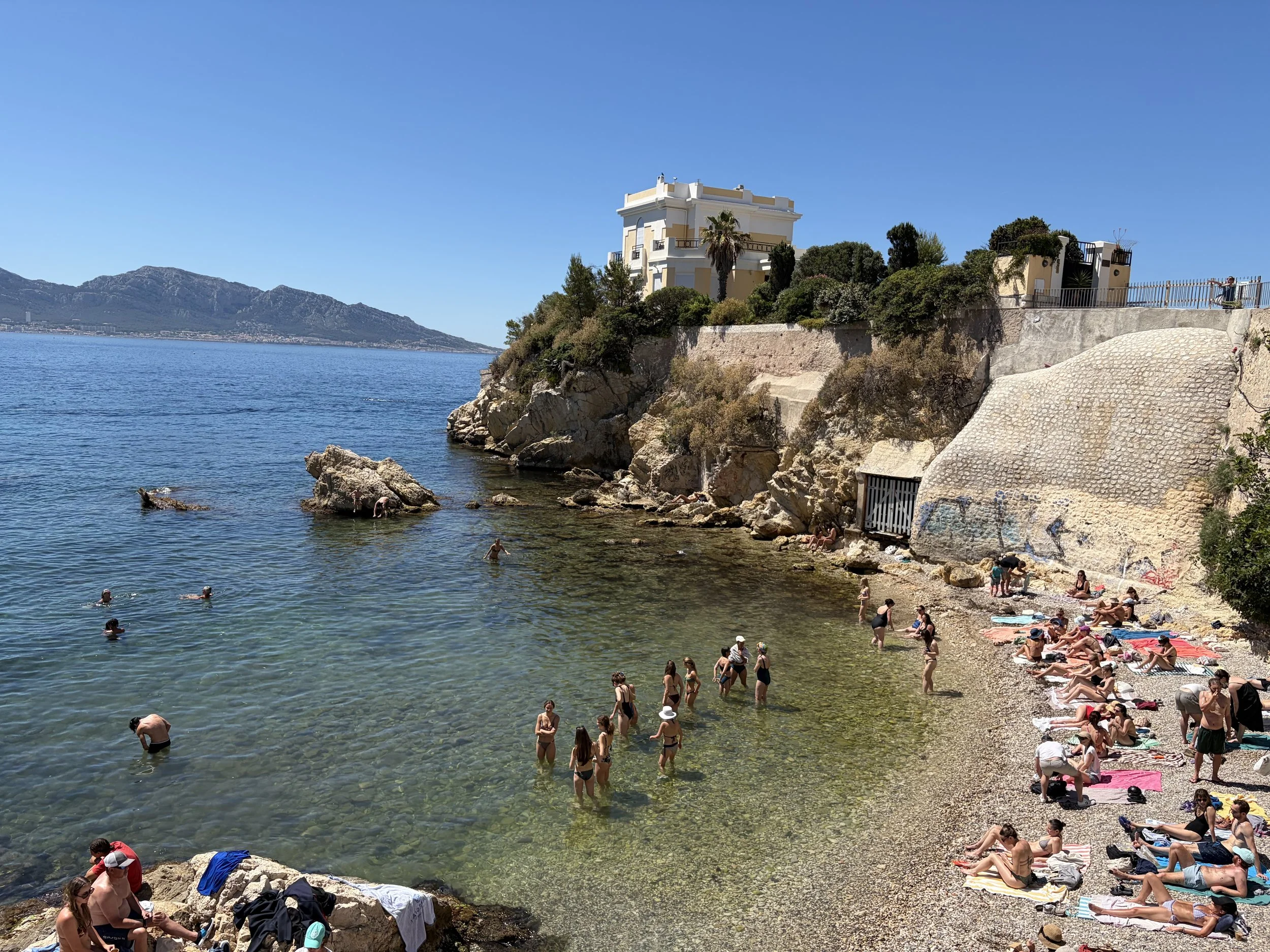
Arabic literature in Marseille
Last week I went to Marseille to visit friends and to attend the Lignes de Faille (“Faultlines”) literary festival, put on by the Karkadé Agency, which gathered Arabic writers, translators, publishers and readers.
The scholar and translator Richard Jacquemond (whose translations have been a great gift) spoke of the long history of Arabic writing inspired, composed and published in Europe, starting with Rifa’a al-Tahtawy’s L’Or de Paris (al-Tahtawy was part of an Egyptian delegation sent to France to acquire scientific knowledge, which actually landed in Marseille just 200 years ago) and including Ahmad Faris El-Shadiyaq’s Leg Over Leg, which was written and published in Paris in 1855.
In attendance were the Egyptian author Mohammed Rabie, who runs a famous Arabic bookstore, Khan Aljanoub, and now also a publishing house, in Berlin. And the Lebanese (now Berlin-based) writer Souhaib Ayoub, who as a teenager lived on the streets of Tripoli, and who spoke with enthusiasm of making exile into a home, turning it into a chance to think and see differently. I picked up Ayoub’s novel Le Loup de la Famille (“The Wolf of the Family”) because everyone said good things about it and also because he was so funny/charming and it has such a great cover.
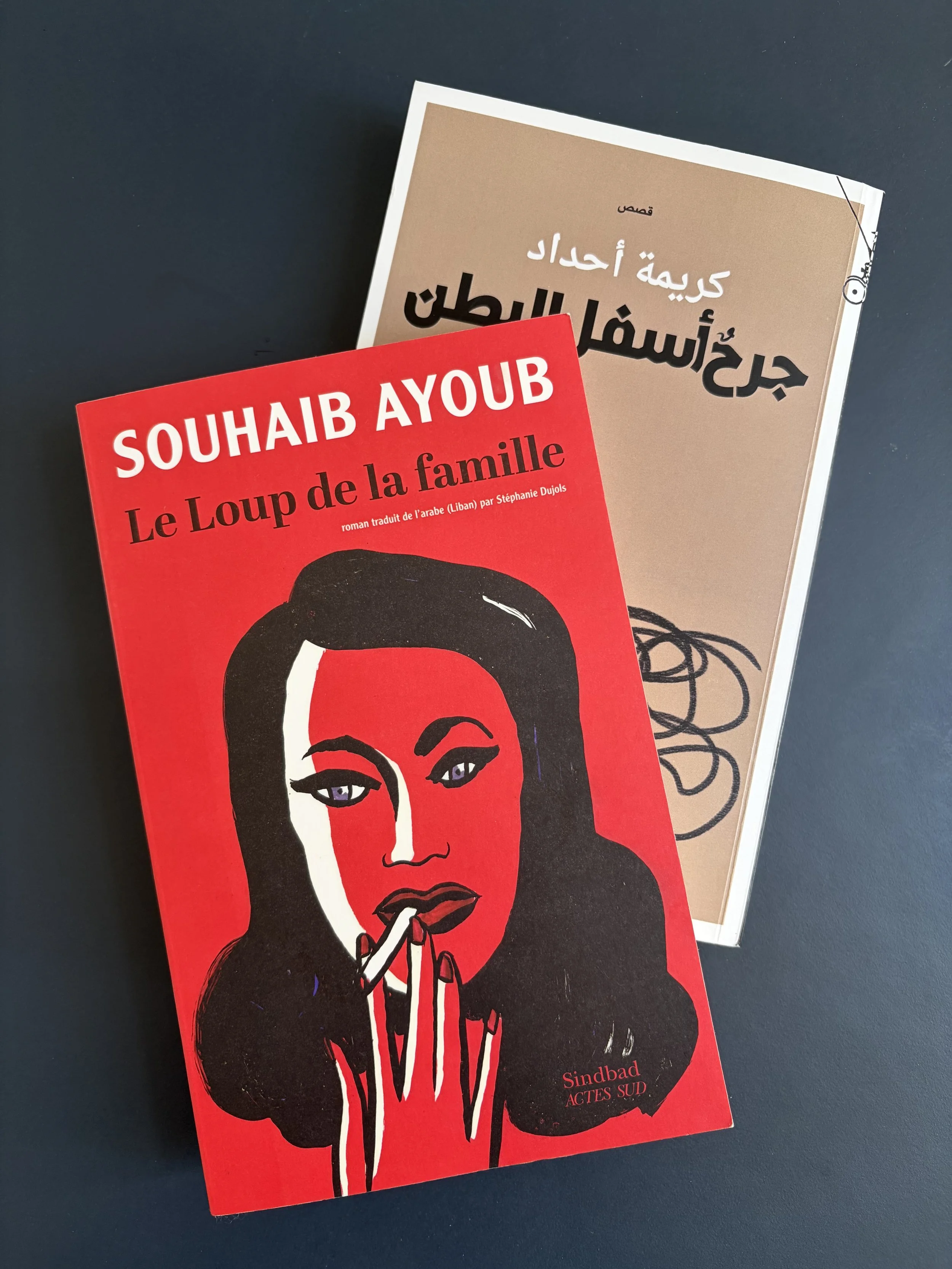
Karima Ahdad’s Lower Abdominal Wound and Souhaib Ayoub’s Wolf of the Family.
I am intrigued by the question of when and how leaving one’s country feels like a choice versus a necessity; where one draws the line between freedom, survival and escape; how and if one remains alienated and wounded, with a sense of loss that can never be quite overcome; or how (perhaps at the same time) one remakes oneself in a new place, adding another language, another community, another layer to one’s identity.
Of course why, how and when one has left matters greatly; some have exile thrust upon them by circumstances that are absolutely tragic, violent and unjust. I was moved to tears by the poet Yousef el-Qedra’s reading of several of his astounding poems. El-Qedra left Gaza for Marseille just a year ago. And yet he had beautiful things to say about the new city he lives in; both Marseille and Gaza “know the meaning of arriving and leaving,” both “speak the language of the sea.”
The next day the Francophone Lebanese artist and writer Lamia Ziadé, speaking of her new memoir/graphic novel Rue de Phénicie, compared living abroad to the special reducing lens painters use to see their works as if at a distance. Her new book, which I haven’t gotten my hands on yet, is partly the story of her joyful youthful explorations of life in Paris, when she moved there during the Lebanese Civil War. But also of her gradual politicisation over the years (or perhaps more accurately of the way she shed a certain avoidance of politics; the only way she could enjoy her art studies in Paris, she writes, was by not speaking of and trying not to to think too hard of Lebanon at all).
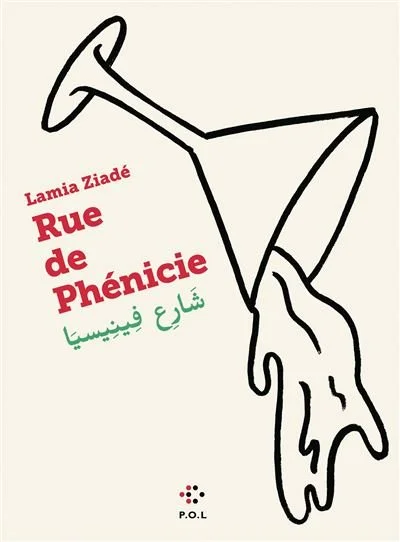
Ziadé, whose drawings I absolutely adore, packs a lot of nuance and depth into her seemingly casual, personal story-telling. She was also very forthright about the dynamics of publishing her work in France. She said the lighter autobiographical section of her new book was a way to get her mainstream, literary publisher to “swallow the pill” of the book’s politics. She noted that her work has always been very well received in French media; but reviewers and interviewers also always avoid engaging with Palestine, even when it is an important part of her stories.
The last talks I attended was by the Syrian writer and reporter Samar Yazbek, who has written extensively about the Syrian civil war and who interviewed injured people evacuated from Gaza to Qatar. (The English translation of her book, Your Presence is a Danger to Your Life: Voices from Gaza, has just been released by Fitzcarraldo). I deeply admire Yazbek for her empathy and dedication; it also made me angry to hear her talk about her latest work; each one of the interviews contains the kind of story that should bring the world screeching to a halt — but that has not. Yazbek herself remains committed to “deconstructing evil…searching for truth…looking suffering in the face.”
The small-ish scale of this event made for a wonderfully intimate, honest and open series of exchanges. It was lovely to spend time with Arabic writing in a way that emphasised how much that writing is part of the space of the Mediterranean. It was great to meet the Moroccan writer Karima Ahdad — who we have interviewed on BULAQ previously— in person and to pick up her new short story collection. I also discovered two very cool and new-to-me cultural spaces, La Fabulerie (right in downtown Marseille near the port) and La Friche, a vast rooftop performance space in the north of the city. And of course I did manage to get to the sea, as one must.