Winter/Spring Readings
Welcome to another instalment of a sporadic journal I’m keeping of my readings / viewings (the ones that I am not doing for work, meaning the selection is a random mix of new and old works and is unrelated to current events). I have let this one grow slowly since I posted in January, so it is quite long.
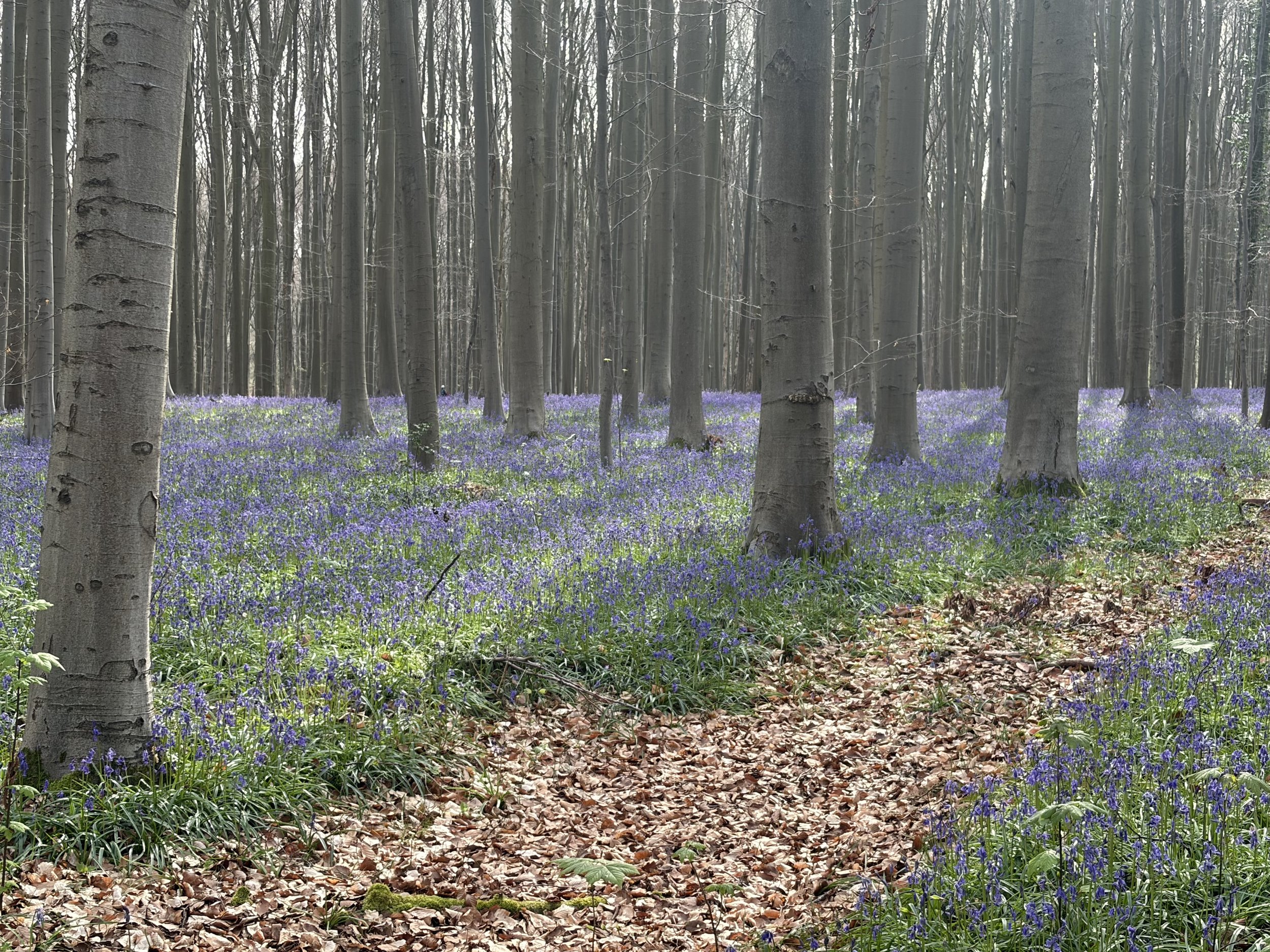
Bluebells flowering in Hallerbos forest in early April
Success by Martin Amis. I started this book because I enjoyed a conversation about it on the Quality Lit Game podcast. I think the only Amis book I’d read before this was Money, a long time ago, which I remember finding funny. But reading Success convinced me that I’d rather spend my time with other authors now. Success is the story of two foster brothers with diametrically opposed trajectories in life (as one falls, the other rises). It is told in alternating chapters by the brothers, both of whom are pretty sad and awful men and one of whom is a fantastically unreliable narrator. Amis can write, there’s no doubt about it. But I grew weary of his determination to outrage and provoke; he so badly wants to be an enfant terrible. To me he reads as very influenced by Philip Roth. But the voice that Roth conjures — the voice of a Jewish American generation that is breaking into new professional and social spaces, participating in a great cultural-sexual-intellectual upheaval (I still think the best I’ve read on this is Vivian Gornick) is just more original and funny and interesting than Amis’, which at the end of the day is the voice of the British upper class. That’s without getting into the many comments in this book about how London is being taken over by yobs and foreigners, and the thin and often distasteful treatment of female characters, such as a plot line involving incest, abuse and suicide. Of course one can argue that Amis is portraying these hopelessly selfish male ids with a full awareness of what he’s doing; he does make them often funny and pathetic; but I still found their (and the author’s) mugging and preening and blustering tiresome in the end.
***
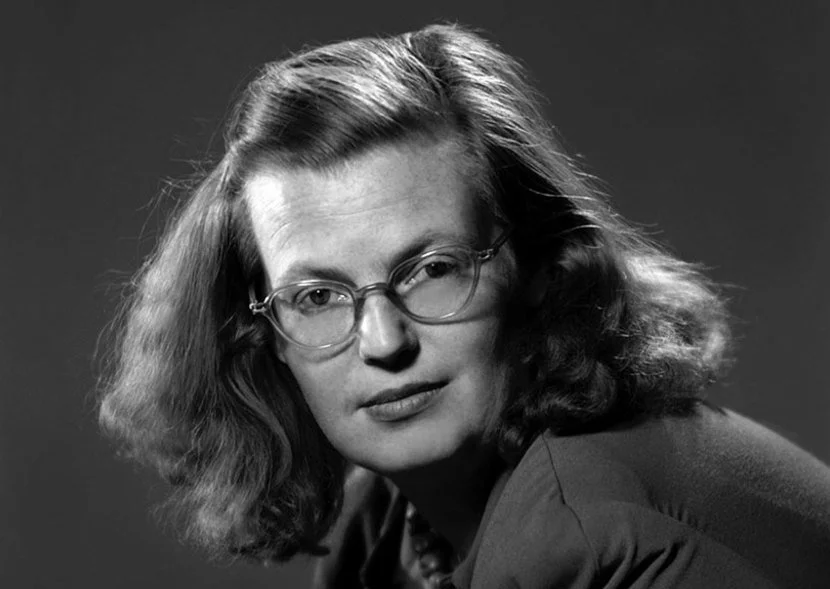
The Haunting of Hill House by Shirley Jackson. Jackson’s We Have Always Lived in This Castle is a book I adore — she is such a weird and wild writer — so I picked this up. I don’t enjoy horror and have a low threshold for physical or psychological torment, but I loved this book. It has some of the best scenes you’ll ever read in which the narrator’s perception suddenly turns, in a way that makes your stomach also turn, from affection and enthusiasm for another person to paranoia and hostility. Jackson’s pacing, the rhythm of her story-telling, is swift and exhilarating. Her tale is better than frightening — it is strange and sad, sweet and creepy. It is about a woman who is so alone she is doomed. The feeling that Jackson creates of what it is like to be in the house — with its off-kilter lines, doors that always slam shut, inexplicable cold drafts — came back to me later like an uncanny dream of my own.
***
The Sisters, by Jonas Hassen Khemiri. Recommended by my friend Adam Shatz (who pretty much never misses with book recommendations). This is an ambitious, complex, extremely readable book that I am still thinking about months later (always a good sign). The story of three Swedish-Tunisian sisters whose lives are shaped by a family curse spans decades and continents. This is world literature in the best sense; literature that moves between languages and cultures and places without making a big deal of it because what in our day and age is more natural? It has fantastic scenes set in Sweden and Tunisia and New York. It is also partly about immigration and its legacy — the question of whether the uprooting of changing countries and cultures is always a curse, and whether that curse can be lifted. It is also about whether the US, and New York — a city of immigrants — can still be haven (it seemingly is for the narrator/author who observes and tells the stories of the three sisters), which is something that I am left very much pondering given our current political moment.
***
I’ve wanted to read Helen DeWitt’s The Last Samurai for a long time. I was reminded of this when she was the center of a little internet debate recently over her turning down — or being turned down for, depends how you see it — the Windham-Campbell Prize. DeWitt was reluctant — for a variety of reasons, ranging from logistical challenges to exhaustion and mental health issues — to engage in the public events and promotional activities that were required of the winners of the $175,000 prize. After she made all this public, the Emergent Ventures fund gave her a grant in the same amount with no strings attached. (The debate that ensued was largely about whether it was reasonable for DeWitt to balk at the requirements of the prize, or whether these sorts of awards should not make such demands of writers).
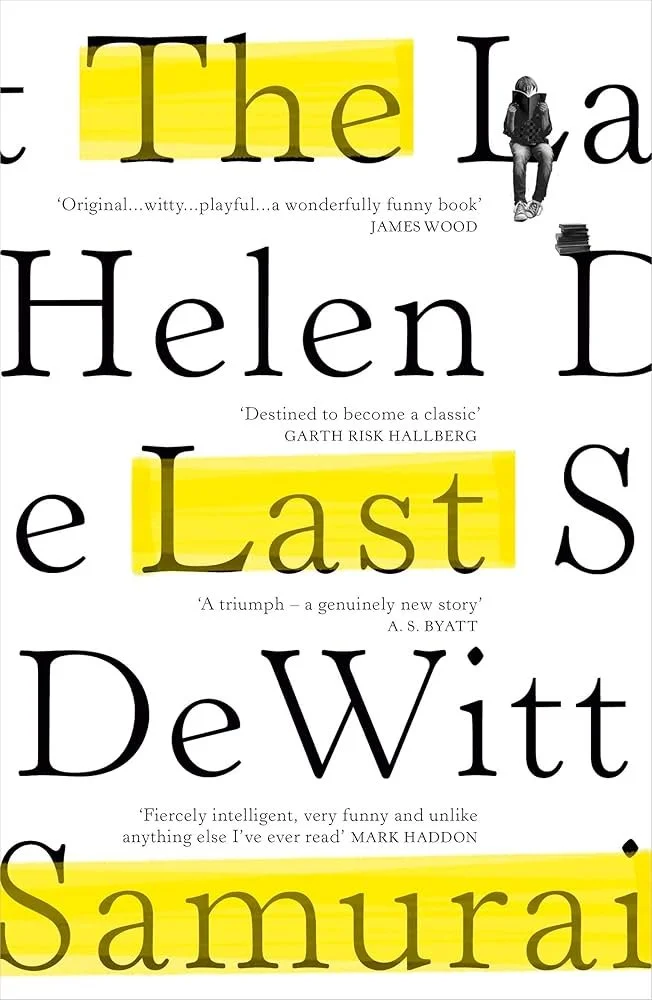
Anyway, back to The Last Samurai. It is always a joy (and a relief) when a book you’ve heard a lot about, and suspect you will like, delivers. I was in London in April, and so it seemed appropriate to get it then; the book takes place there, on the London metro and at its museums and other public institutions, where Sybilla and Ludo, the brilliant and penniless mother and son protagonists, spend a great deal of their time. The book was, as hoped, funny and original, a little sad, consistently entertaining. The way in which DeWitt manages to integrate enormous swaths of knowledge into the narration (in a way that I think has inspired many imitators) — to weave intellectual curiosity and passion and obsession into the story — is really extraordinary. Syb and Ludo lead a life almost entirely dedicated to the cultivation of learning and the pleasures of the mind — and we see the difficulties that such a life entails, the isolation and economic precarity, the confusion and ambivalence of onlookers. One cannot consider the child prodigy Ludo — who learns ancient Greek and many other languages starting at the age of three, simply because his mother rightly assumes that he can — without asking oneself some uncomfortable questions about one’s own ambitions and capacities. The books also raises questions about how extraordinary people can or should make use of their abilities. Yet all of this is done in ways that are suspenseful and playful. In the second half of the book, Ludo goes in search of his unknown father, and encounters a series of male geniuses / potential role models / disappointments. The Last Samurai was published in 2000 and I couldn’t help thinking that nowadays the ubiquitousness of smart phones and social media and AI make its vision of pure concentration, intellectual excellence, and the pursuit of knowledge for its own sake seem even more romantic and quixotic.
***
One of the great pleasures of living in Brussels now is having access to good independent cinemas. I’ve seen some great films since we moved here, but the one that most made an impression on me is 80 years old. Sciusciá is the movie Vittorio DeSica made before Ladri di Biciclette. I saw it at the Cinematek in Brussels. (It was my very clever husband’s suggestion.) The title is an Italianization of “shoe-shine” and refers to the street kids who shined the shoes of American soldiers posted in Italy right after the war. It is the story of two such boys, who are great friends and share a dream (of owning a horse) but who get charged with black market racketeering and sent to a jail for juvenile delinquents. There one mistake and misunderstanding leads to another, leading the boys to betray each other without intending to. Pauline Kael wrote that the film is “is one of those rare works of art which seem to emerge from the welter of human experience without smoothing away the raw edges, or losing what most movies lose — the sense of confusion and accident in human affairs.” Orson Wells said that when he watched this film, “the camera disappeared, the screen disappeared; it was just life . . .”
That was exactly my experience. The film is overwhelming in its immediacy, truth, emotional power. You feel that every line in the film is improvised; you feel that no one in the film is acting. You see face after face and hear line after line that are unforgettable.
This is despite the film’s technical limitation: Some night-time scenes in the film are so dark and blurry you can hardly make out what is happening; in the version I saw the subtitles were terrible but luckily I could understand the dialogue, which is in Roman dialect and absolutely wonderful.
Even as tragedy strikes there are flashes of beauty and humour and life; all these Italian kids who are so fierce and innocent. The end of the film is mercifully swift but devastating. I was bawling. What staid with me was the furious and utterly disillusioned face of the young actor playing Pasquale.
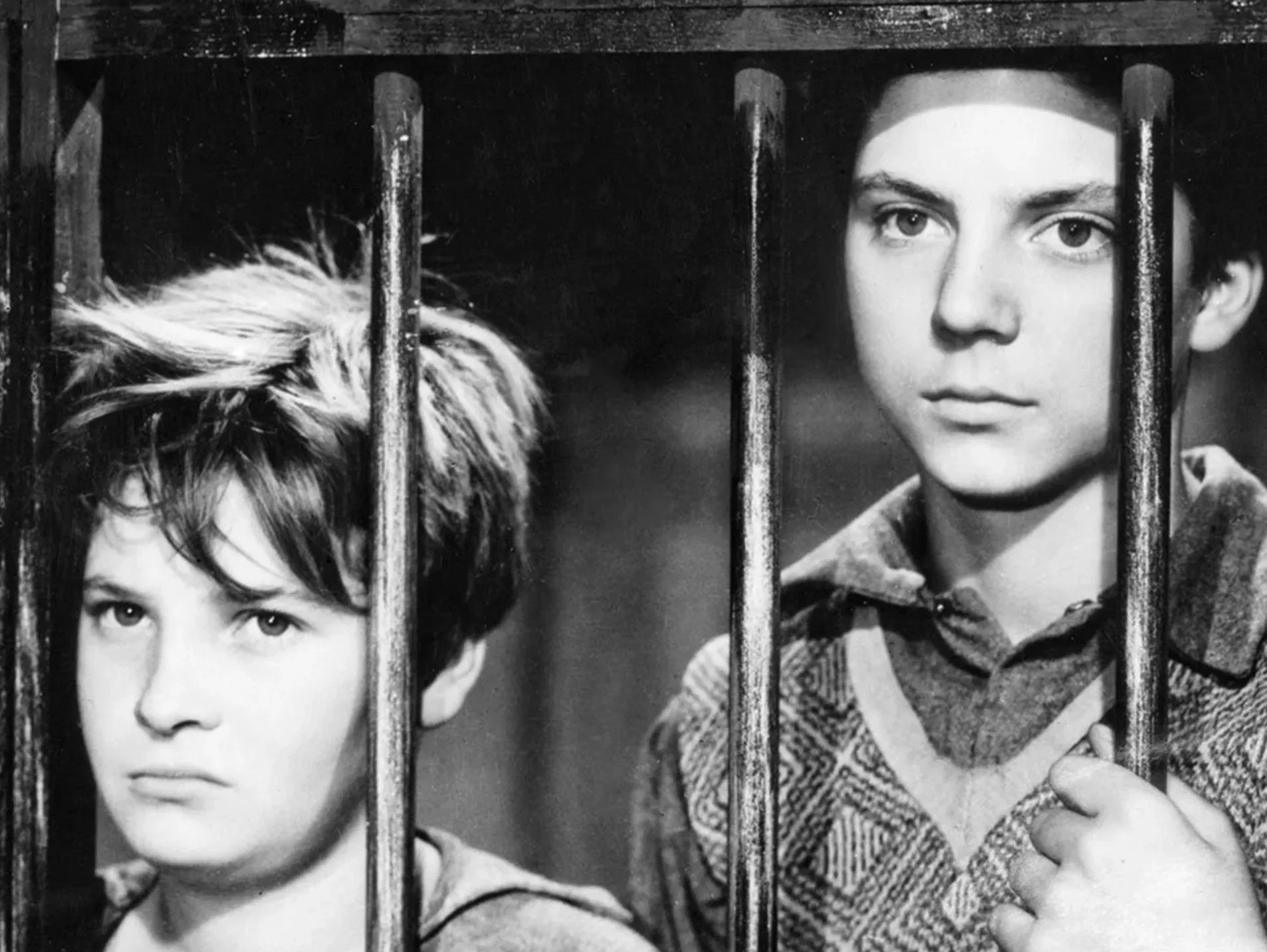
(Giuseppe, left, played by Rinaldo Smordoni; Pasquale, right, is played by Franco Interlenghi. He grew up to play the lead in another extraordinary movie, Fellini’s I Vitelloni)